The Phillips Curve Is Not What You Think
Definition and Importance of the Phillips Curve
- Definition: A relationship between inflation and unemployment.
- Initially (Phillips): wages. Today: often prices.
- Empirical correlation or “structural relationship” = causal relationship.
- Example of a causal relationship: low unemployment ⇒ nominal wages increase because bargaining power rises.
- Not straightforward: economic theory determines relative prices, not the general price level. Monetary issues are very difficult in macroeconomics.
- Importance of the Phillips curve:
- A cornerstone of New Keynesian economics: trade-off.
- Stabilizing inflation means stabilizing economic activity.
- There is a trade-off between inflation and unemployment: do not go below the structural unemployment rate to avoid triggering inflation.
- Example: Biden’s stimulus plan(s).
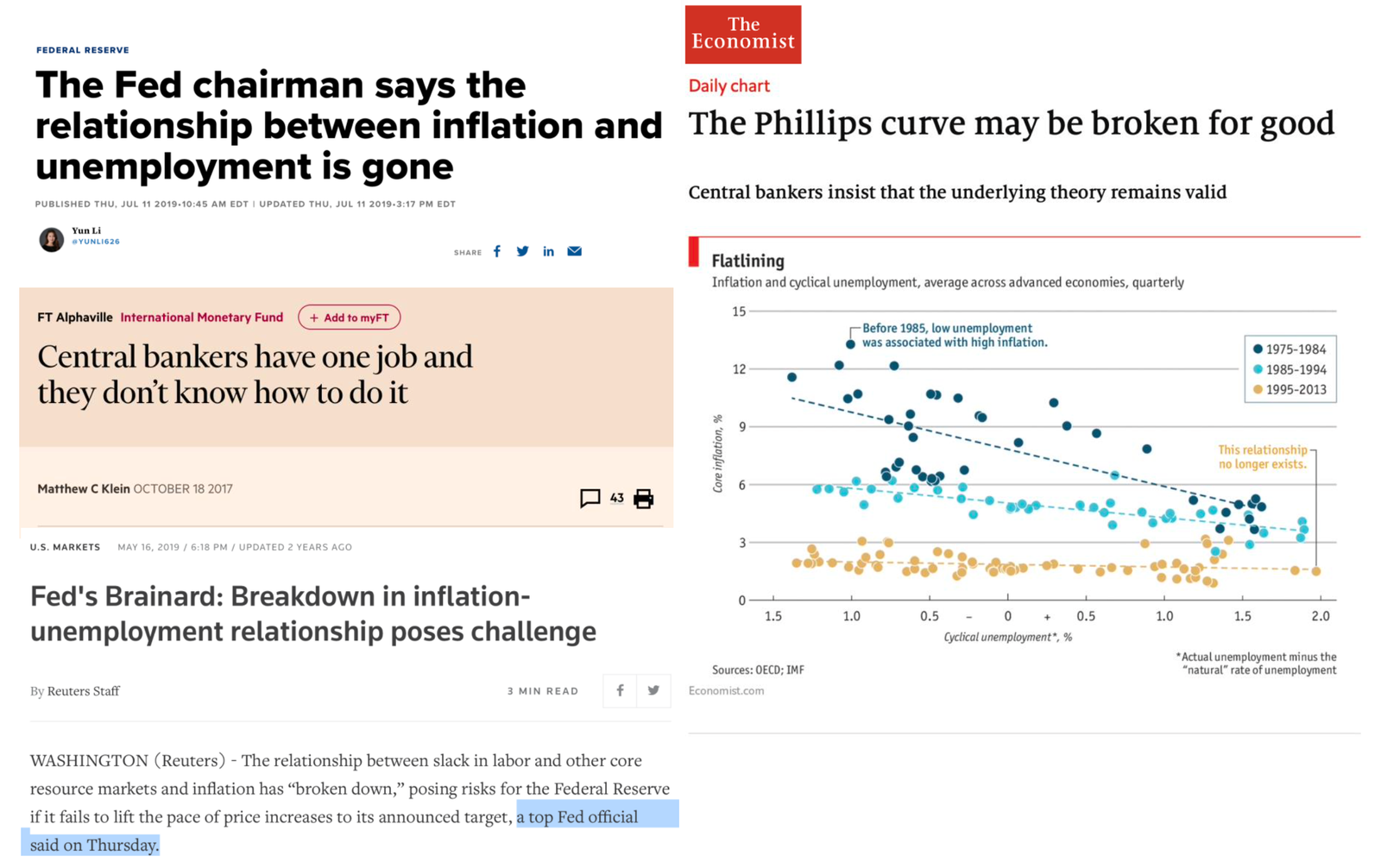
Recent Doubts About the Phillips Curve, Much Stronger in the U.S. (Fed)
Recent Doubts About the Phillips Curve: The 2007–09 Financial Crisis
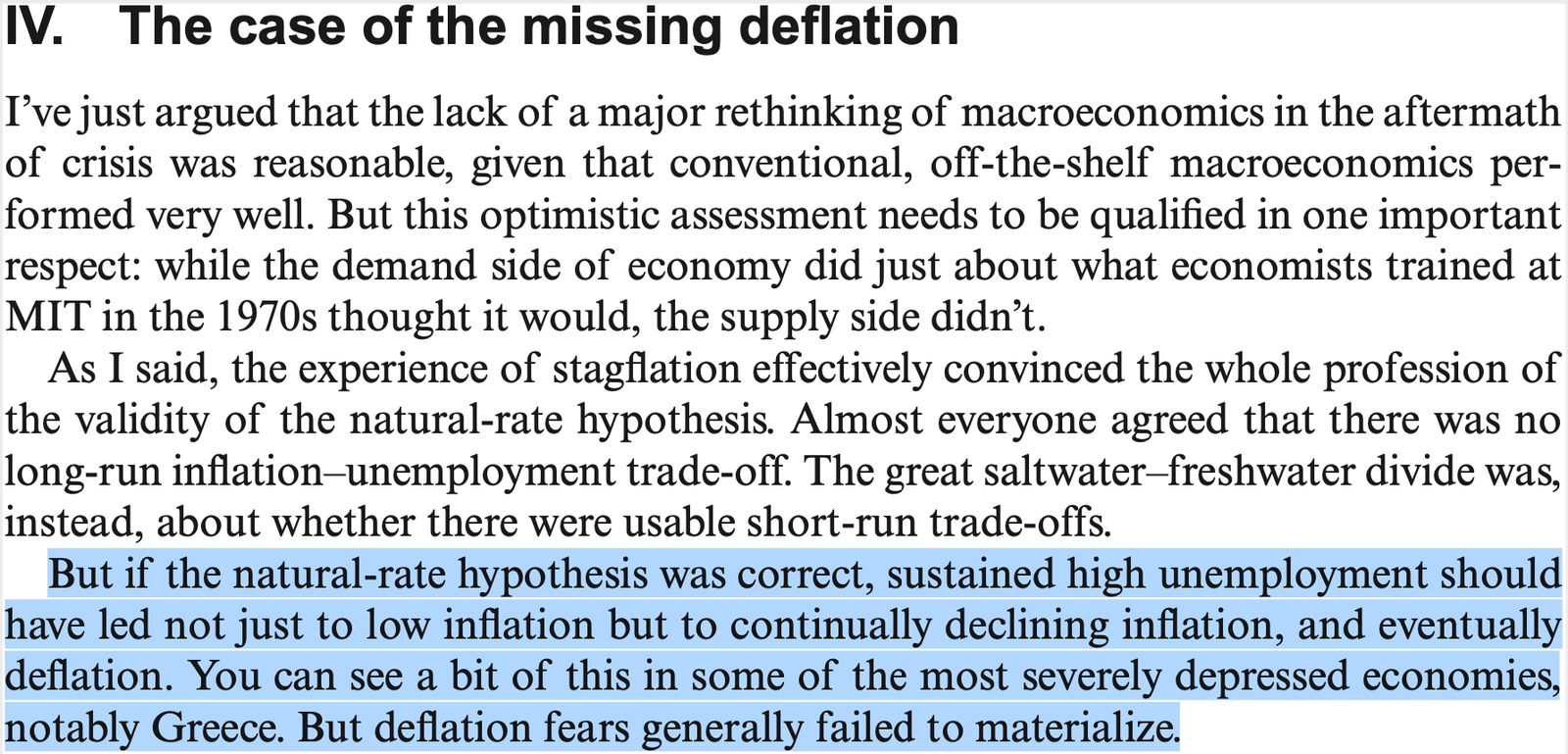
- No deflation during the 2007–2009 crisis. Krugman (2018):
Thesis 1: Phillips Curve Under Fixed Exchange Rates, Not Flexible
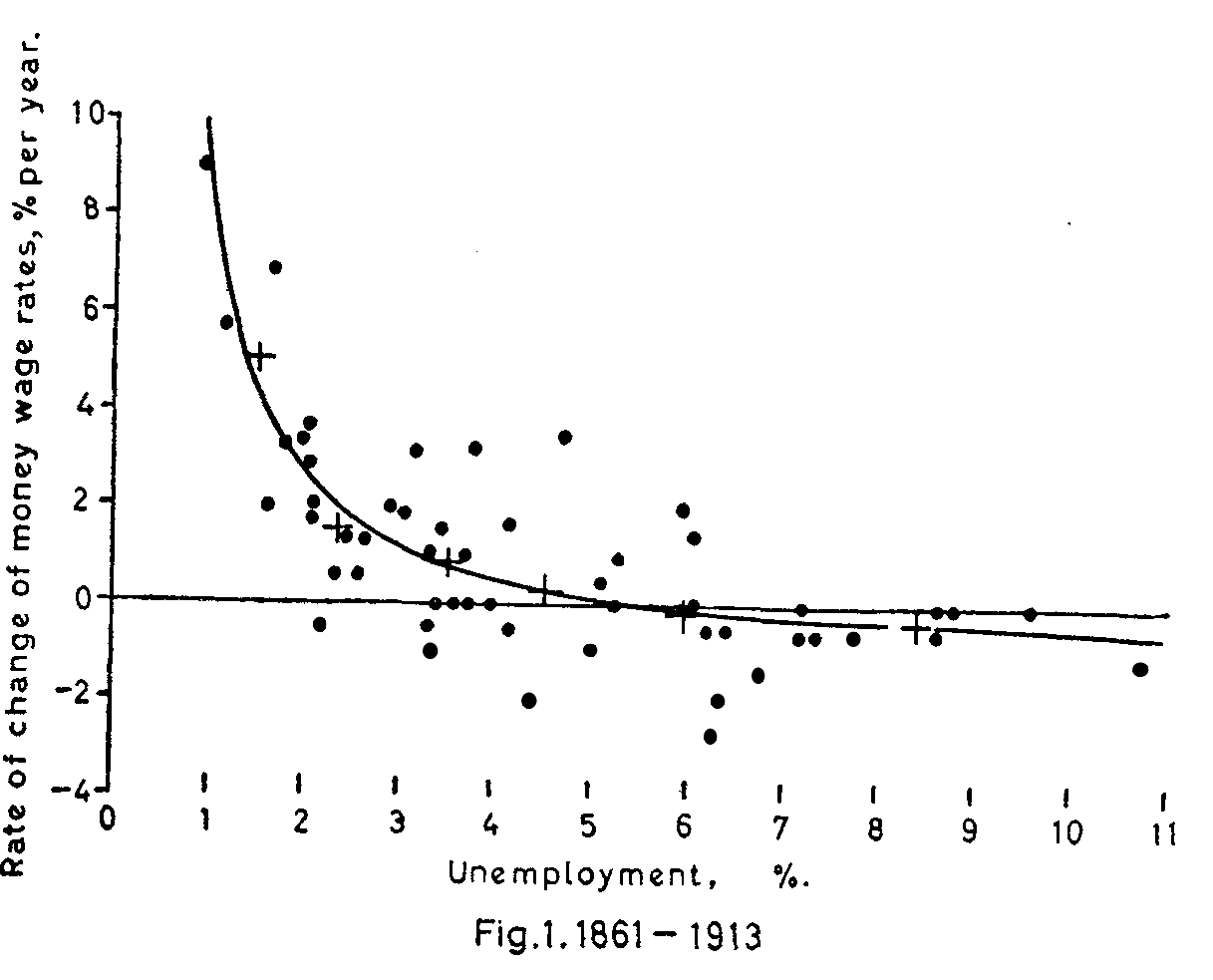
Phillips Correlation

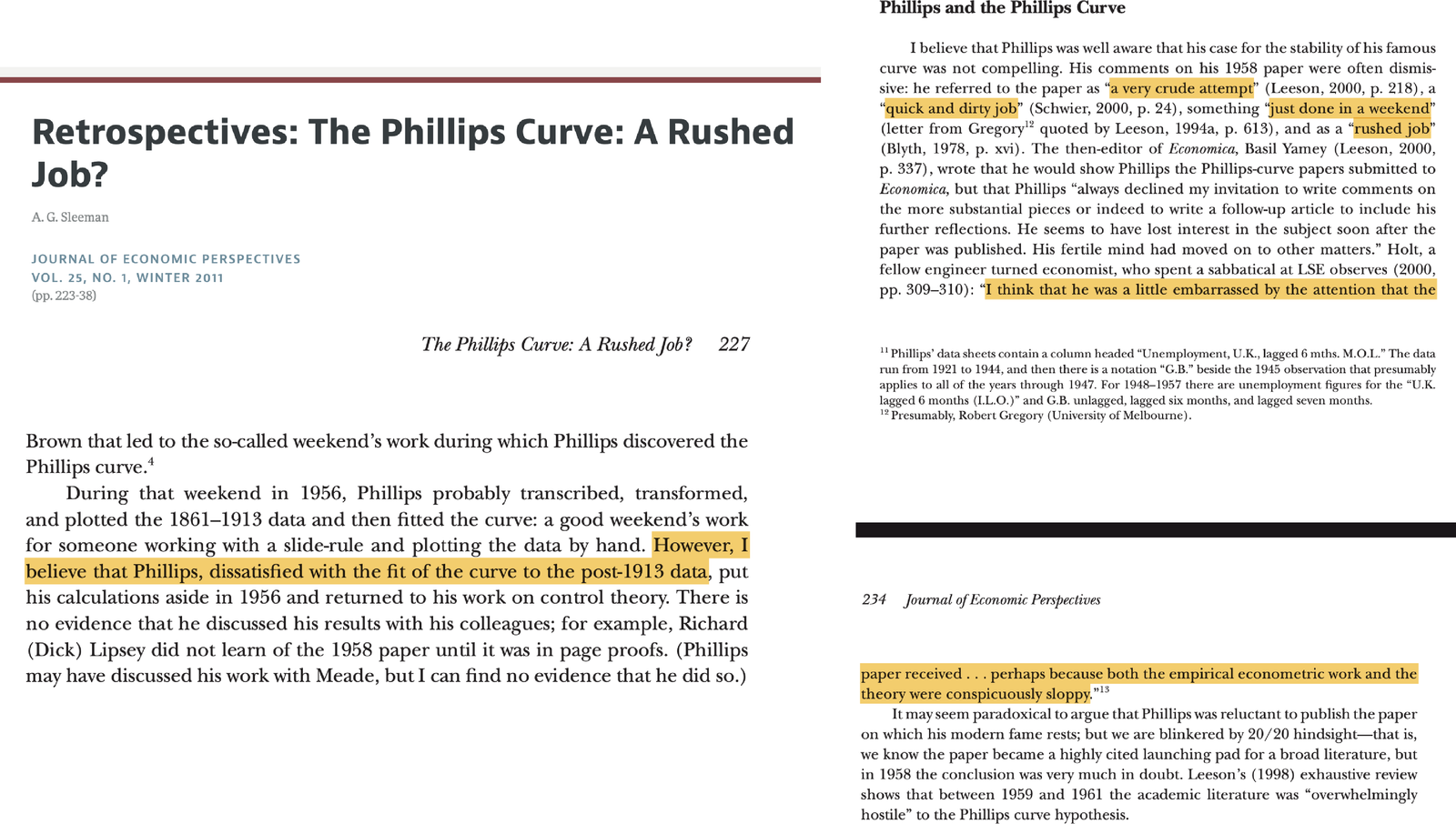
Post 1913 fit was disappointing. Source: Sleeman (2011)
“a very crude attempt”, a “quick and dirty job”, “something just done in a weekend”
Phillips Correlation
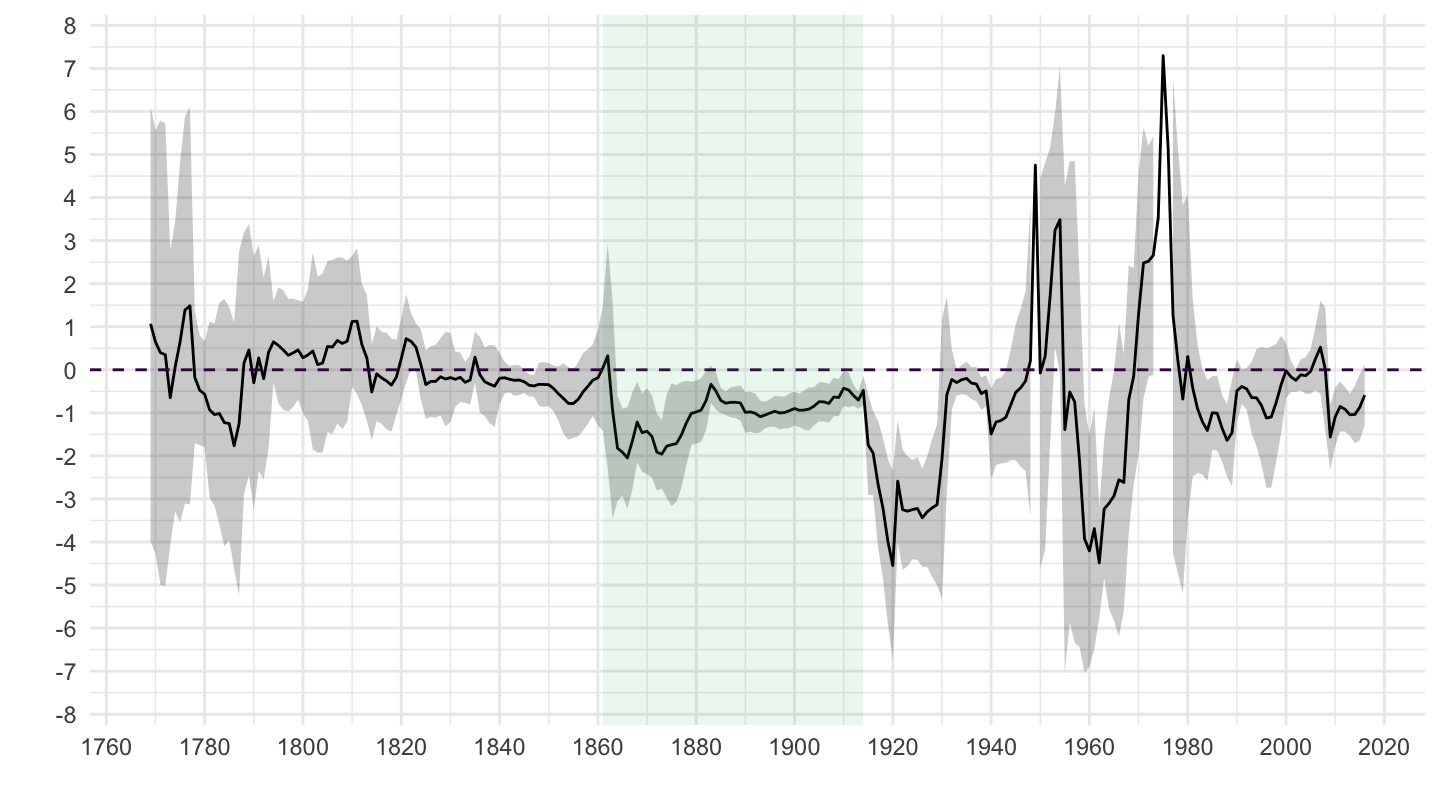
Rolling 10-year regression. Phillips chose exactly 1861-1913, where it works…
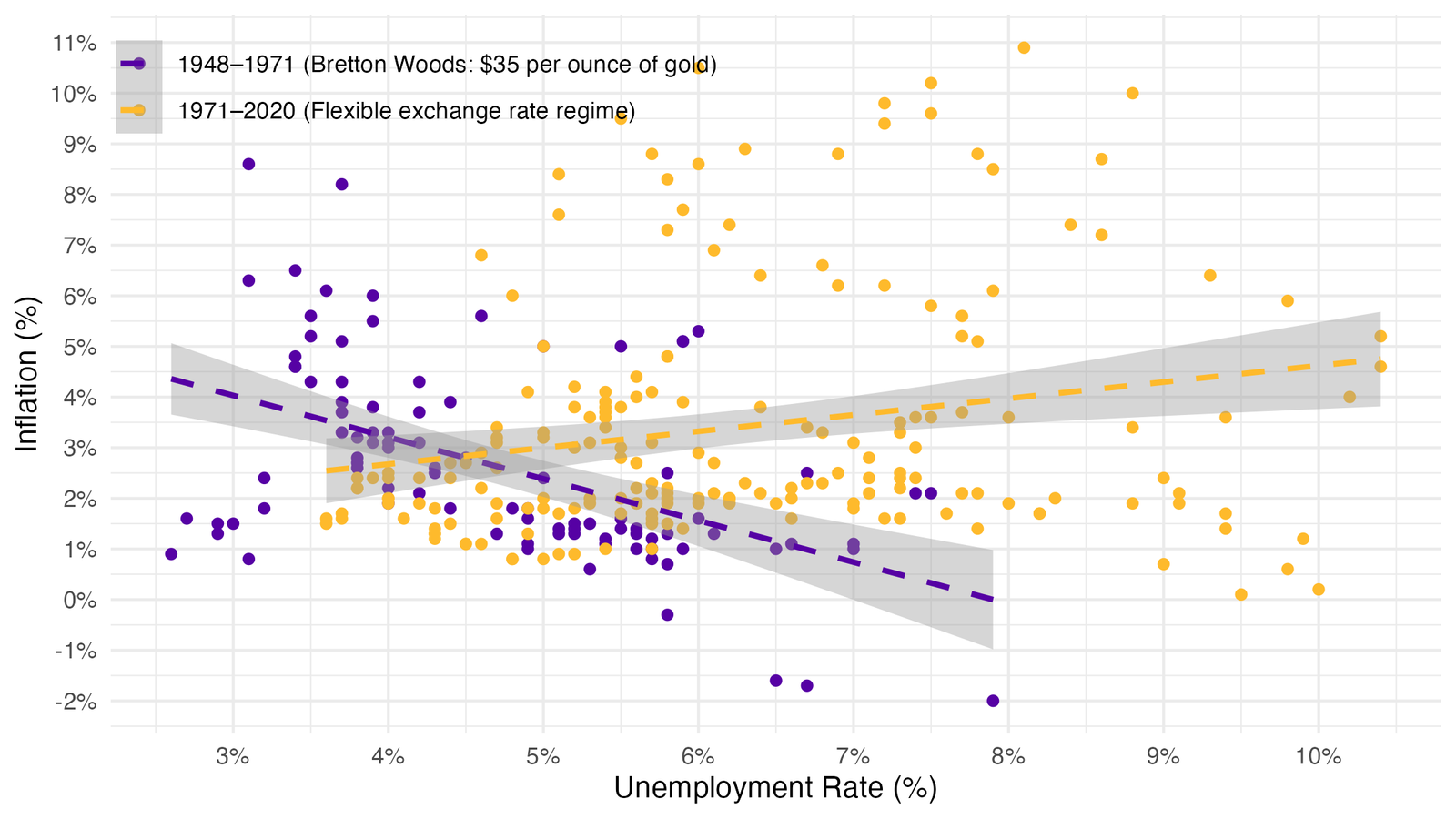
Example of a Phillips Curve
Thesis 2: Decomposition Between Non-Tradable Goods (Housing) and Tradable Goods
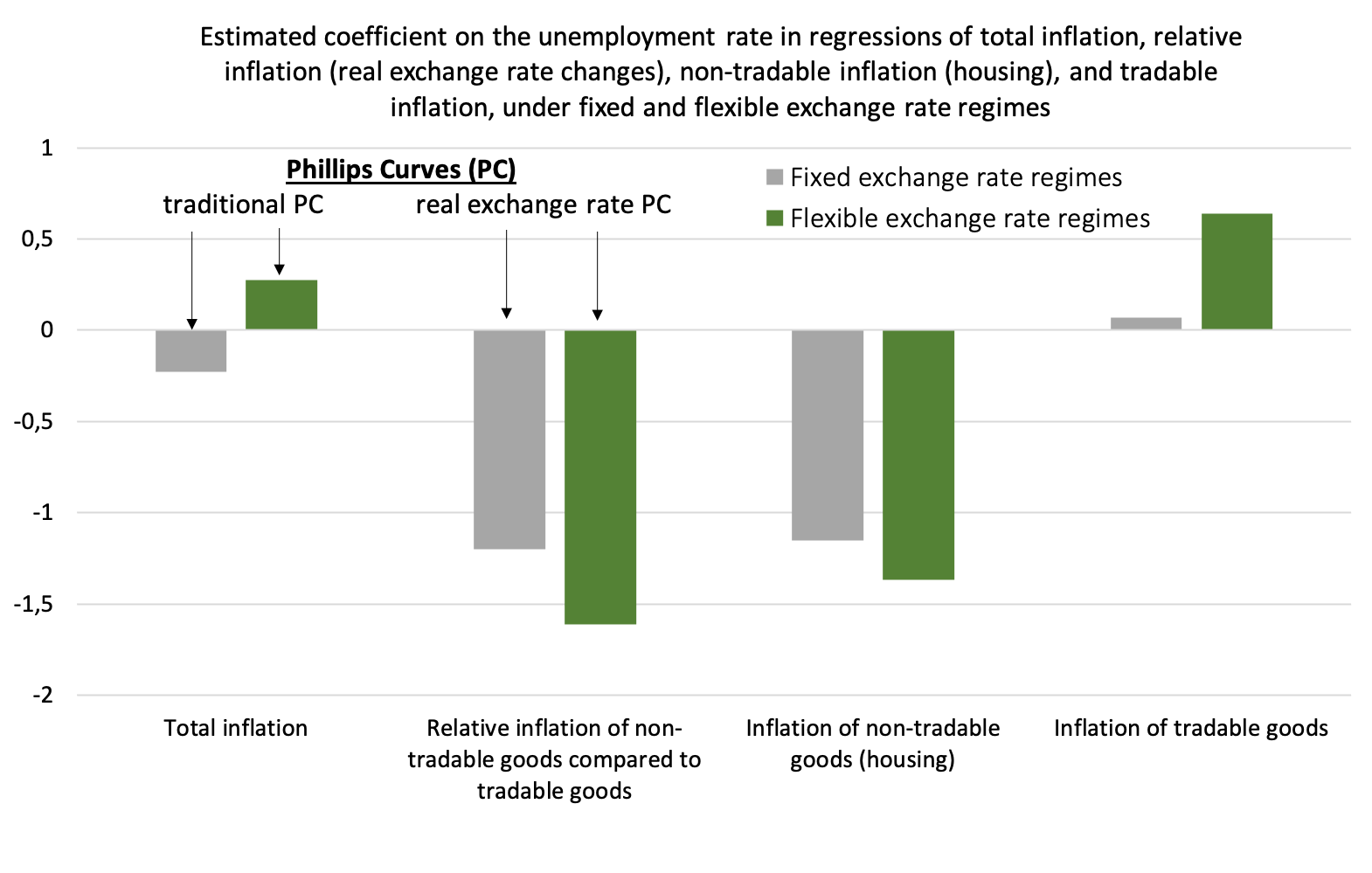
Thesis 2: Decomposition Between Non-Tradable Goods (Housing) and Tradable Goods
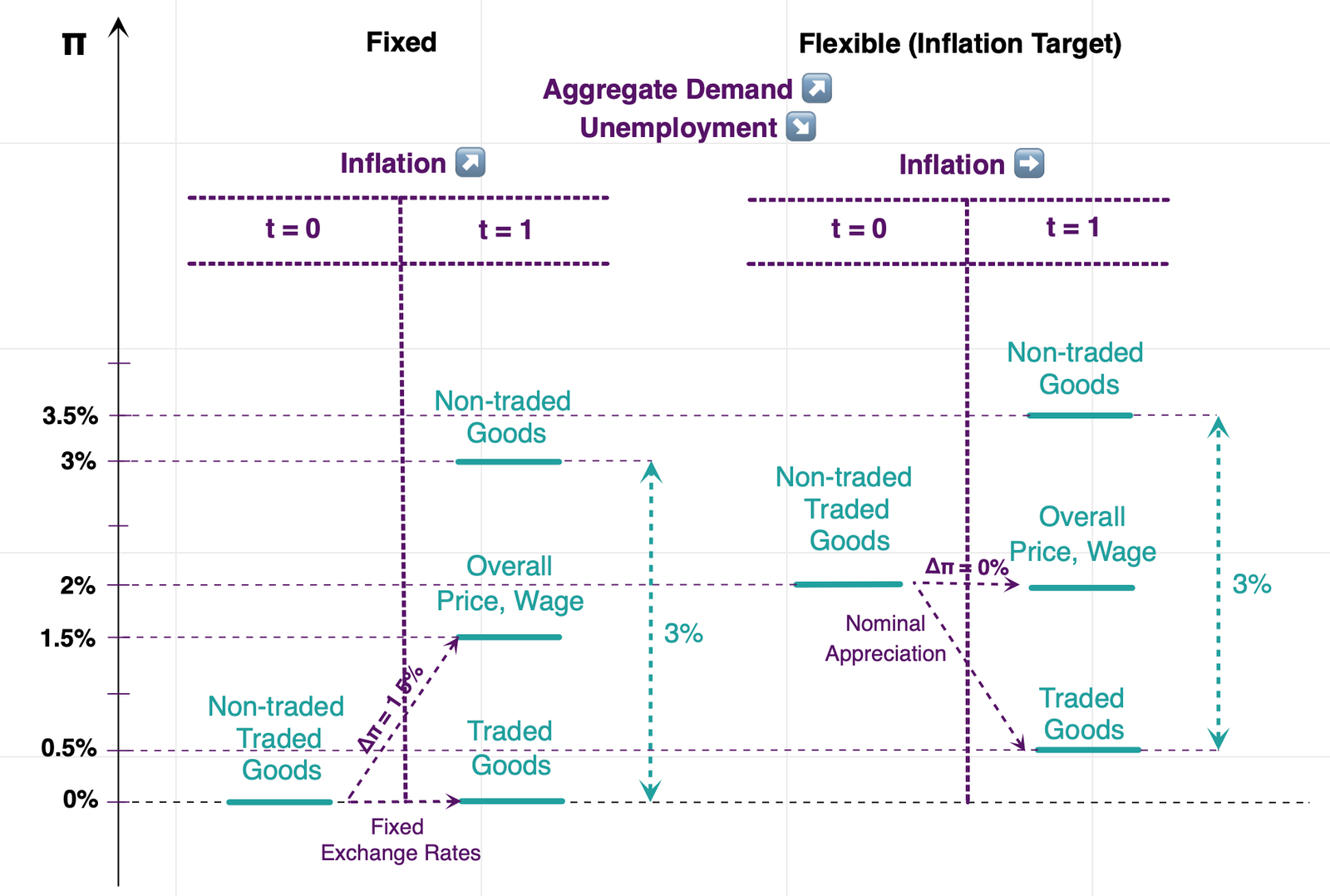
Example of This Price Index Decomposition

The Dichotomy Holds More Generally
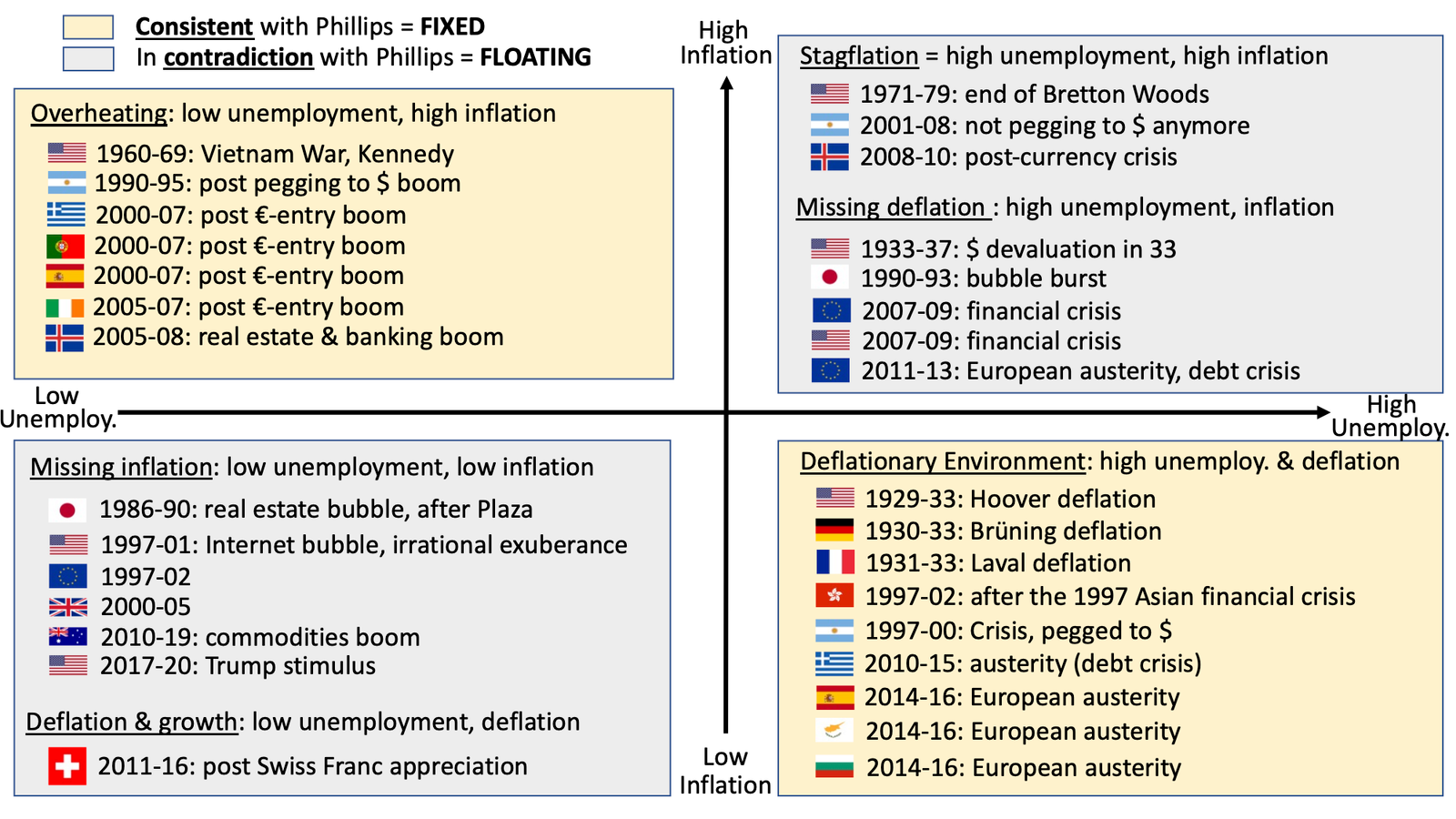
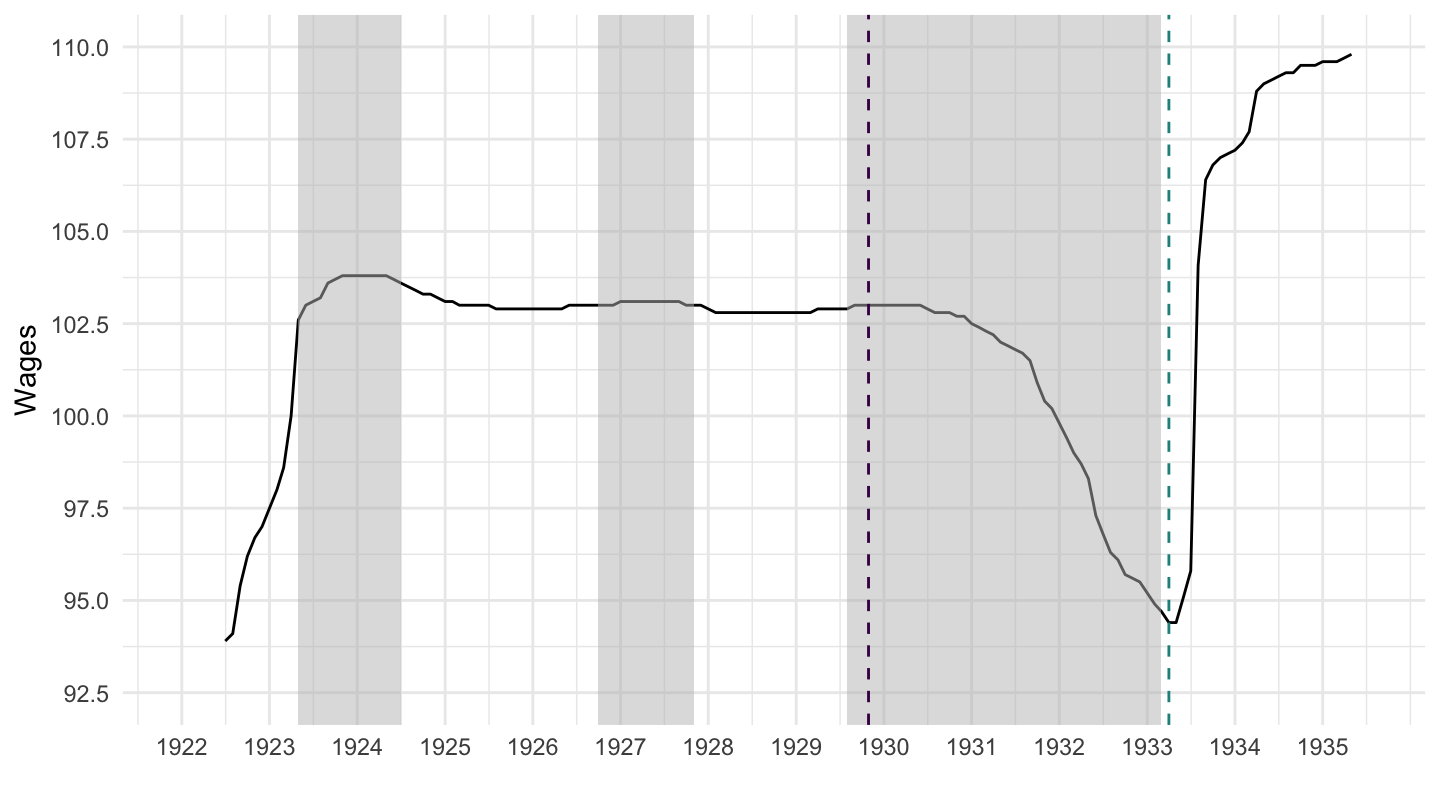
Roosevelt, 1933
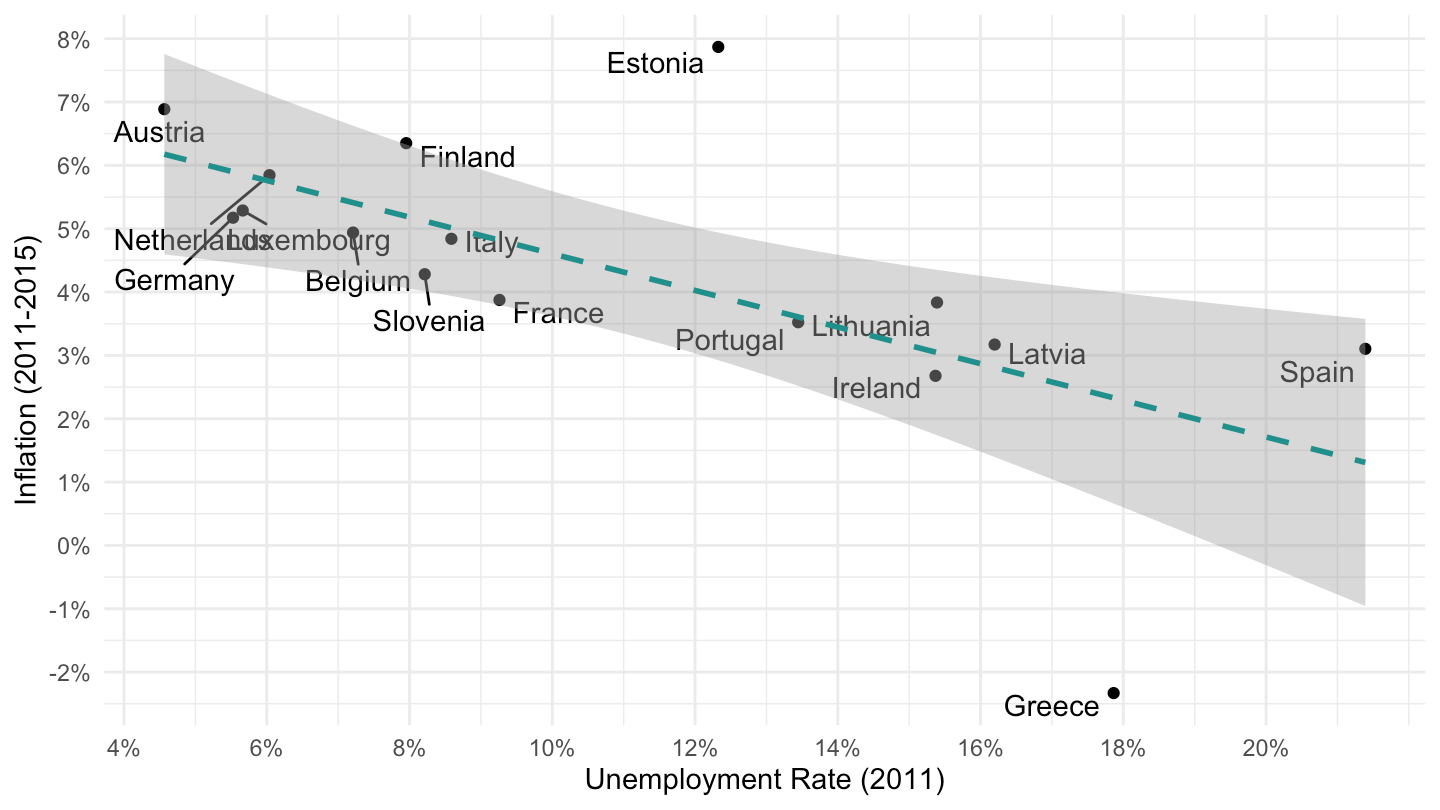
Europe, 2010-15
Conclusion
The original Phillips curve was “discovered” under the gold standard (Phillips) and the Bretton Woods system (Samuelson–Solow), in which an increase in nominal wages is an increase in wages in gold (i.e., real wages).
More generally, the Phillips curve holds under fixed exchange rate regimes, but to my knowledge: very few examples exist under flexible exchange rates.
Implications: a reconsideration of monetary policy? (mandate: employment)
Importance of competitiveness issues, trade deficits, and accelerated deindustrialization linked to demand-side policies.