ENPC, 2nd year - SEGF
OFCE/Sciences Po, CEPR
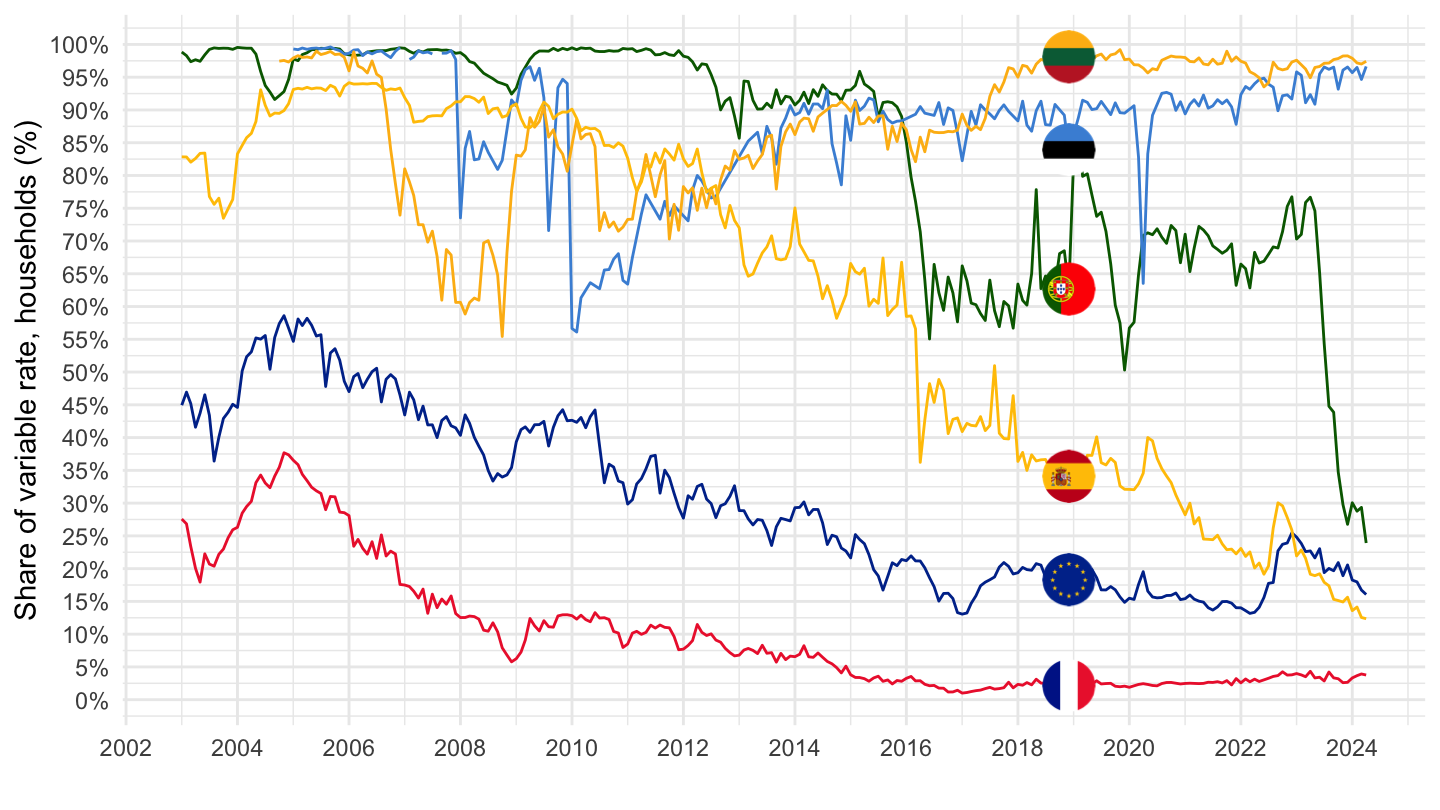
Income, not substitution effects ? The importance of adjustable vs. fixed rate mortgages, particularly housing markets. Institutional detail.
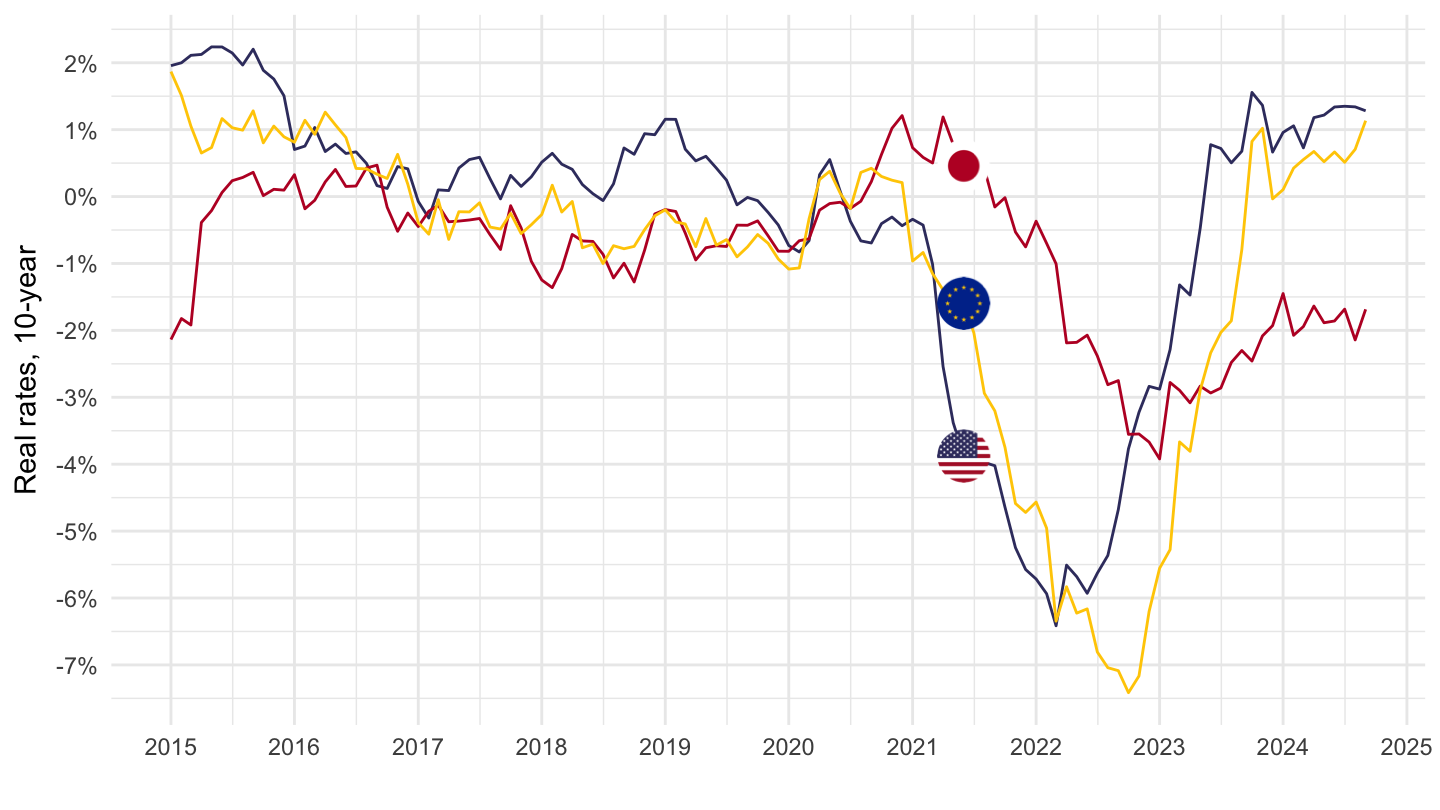
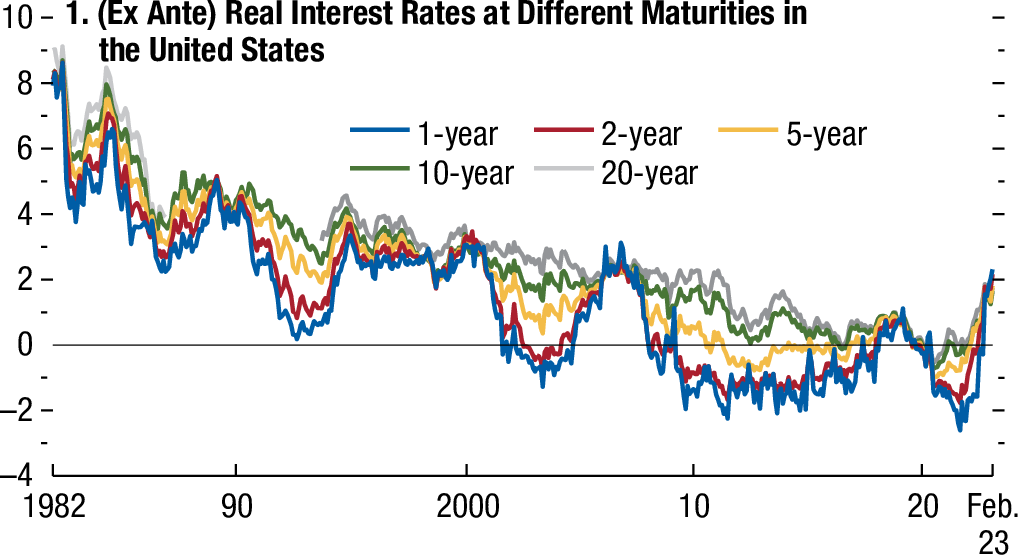
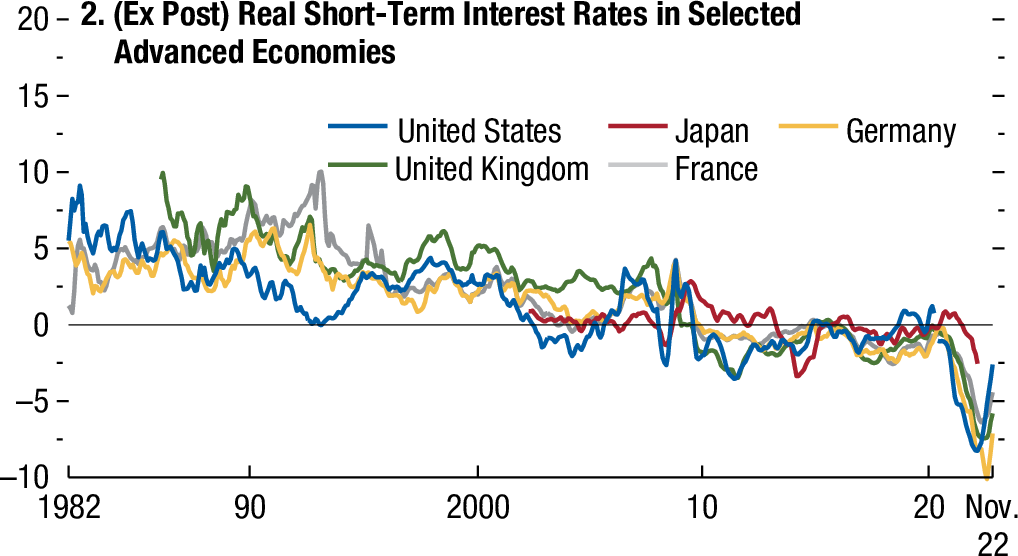
Real vs. nominal rates. Problem with the “natural rate” view.
“Sticky prices” or something else ?
“Are inflation dynamics different in the euro area and the United States?” C. Blot & F. Geerolf, Monetary Dialogue Paper, November 2023, requested by the ECON committee, European Parliament. [pdf] [html]
“Excess liquidity in the euro area? Assessment and possible ways forward.” C. Blot, J. Creel & F. Geerolf, Monetary Dialogue Paper, September 2023, requested by the ECON committee, European Parliament. [pdf] [html]
“Is monetary tightening a threat to financial stability?” C. Blot, J. Creel & F. Geerolf, Monetary Dialogue Paper, June 2023, requested by the ECON committee, European Parliament. [pdf] [html]
“The direct and indirect impacts of the war on inflation.” C. Blot, J. Creel & F. Geerolf, Monetary Dialogue Paper, March 2023, requested by the ECON committee, European Parliament. [pdf] [html]
“Heterogeneity of inflation in the euro area: more complicated than it seems.” C. Blot, J. Creel, F. Geerolf & S. Levasseur, Monetary Dialogue Paper, November 2022, requested by the ECON committee, European Parliament. [pdf] [html]
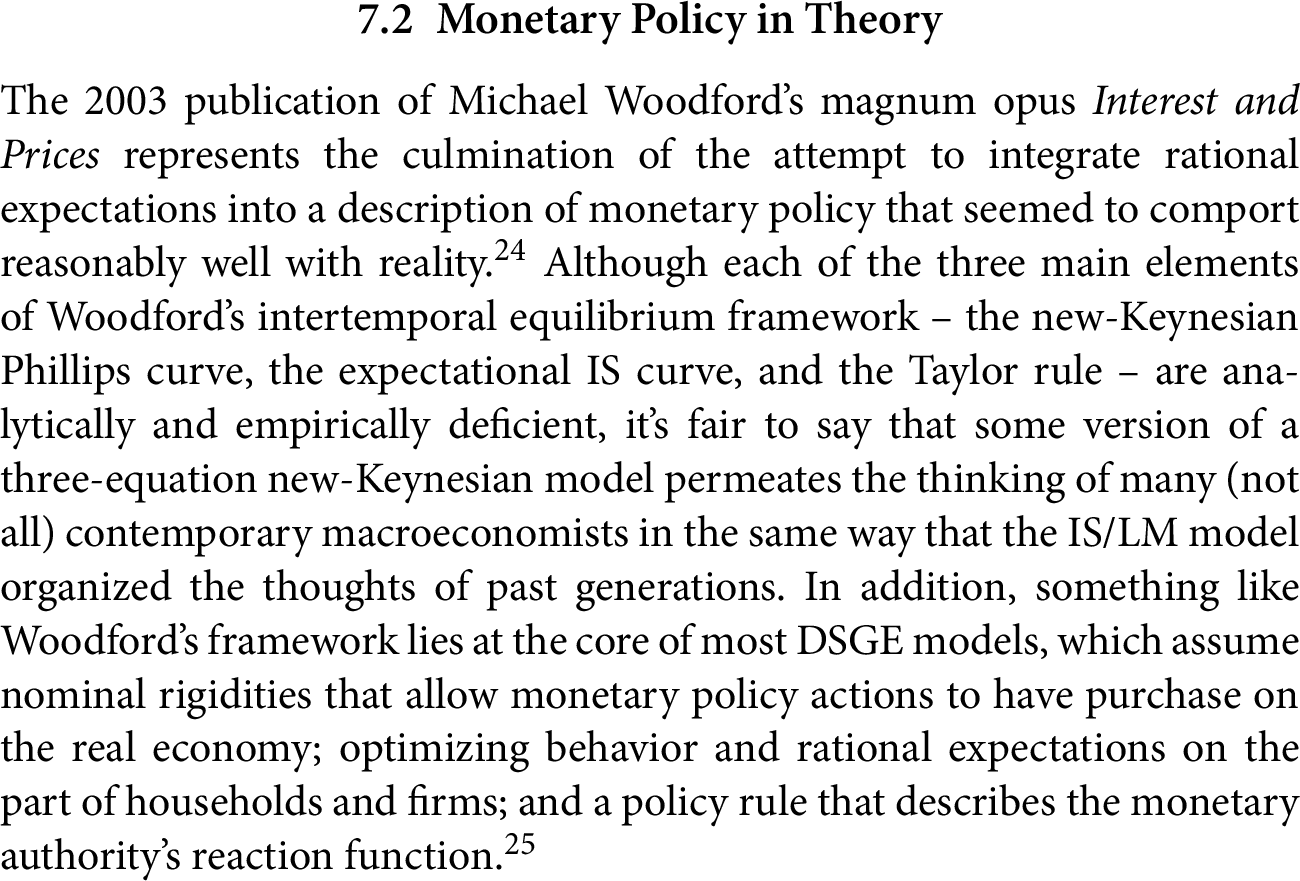
The IS curve represents the relationship between the output gap and the real interest rate. It can be written as:
\[y_t = E_t[y_{t+1}] - \frac{1}{\sigma}(i_t - E_t[\pi_{t+1}] - r^n_t)\]
where:
The Phillips curve describes the relationship between inflation and the output gap. It can be written as:
\[\pi_t = \beta E_t[\pi_{t+1}] + \kappa y_t + u_t\]
where:
The Taylor rule is a monetary policy rule that describes how the central bank sets the nominal interest rate in response to deviations of inflation from its target and the output gap. It can be written as:
\[i_t = r^n_t + \pi_t + \phi_{\pi} (\pi_t - \pi^*) + \phi_y y_t\]
where:
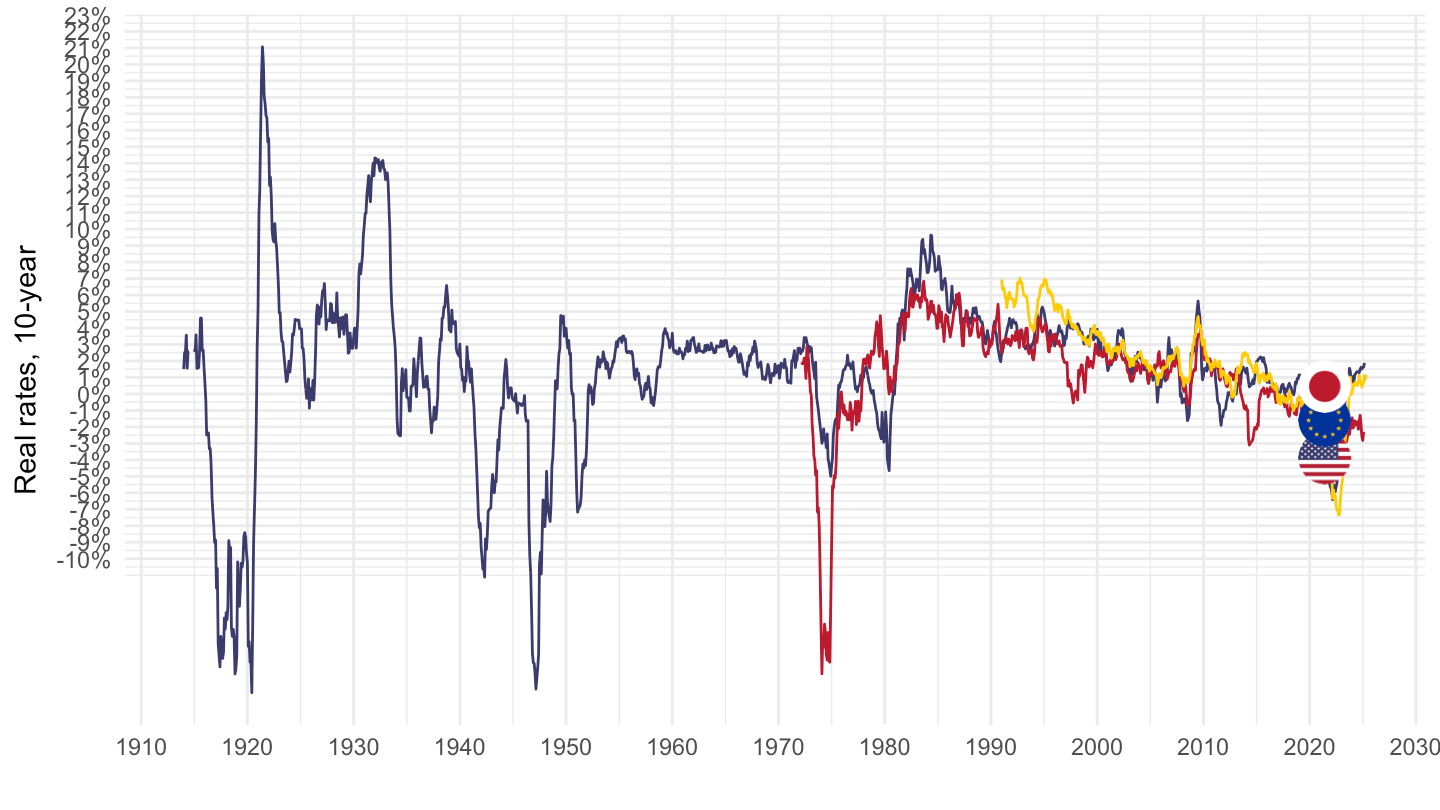
Euler equation (IS curve) of the NK model: real interest rates. Nominal rates \(\Rightarrow\) real rates in the NK model.
Even outside of the NK model, we teach that nominal rates should take into account inflation in some way:
– Realized,
– Or expected
Consequence: more realized / expected inflation \(\Rightarrow\) raise nominal interest rates to keep real rates unchanged.
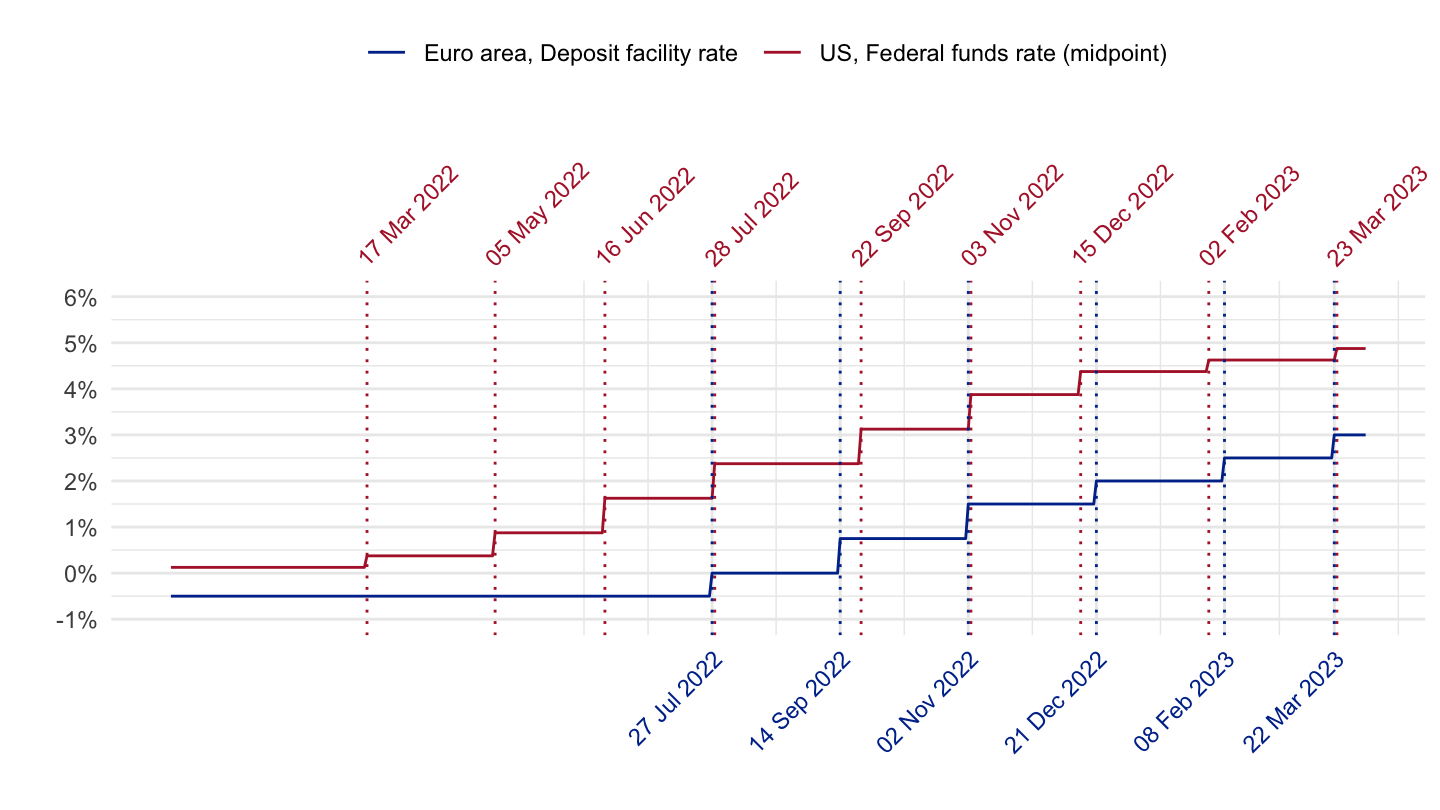
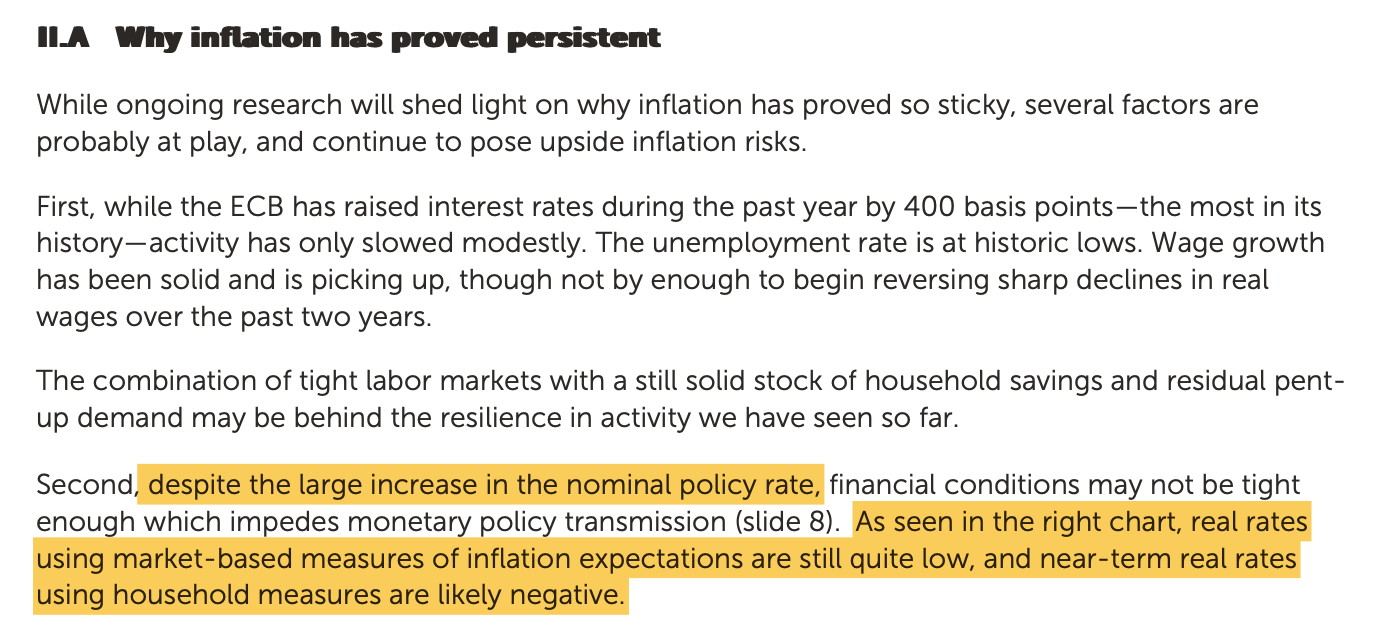
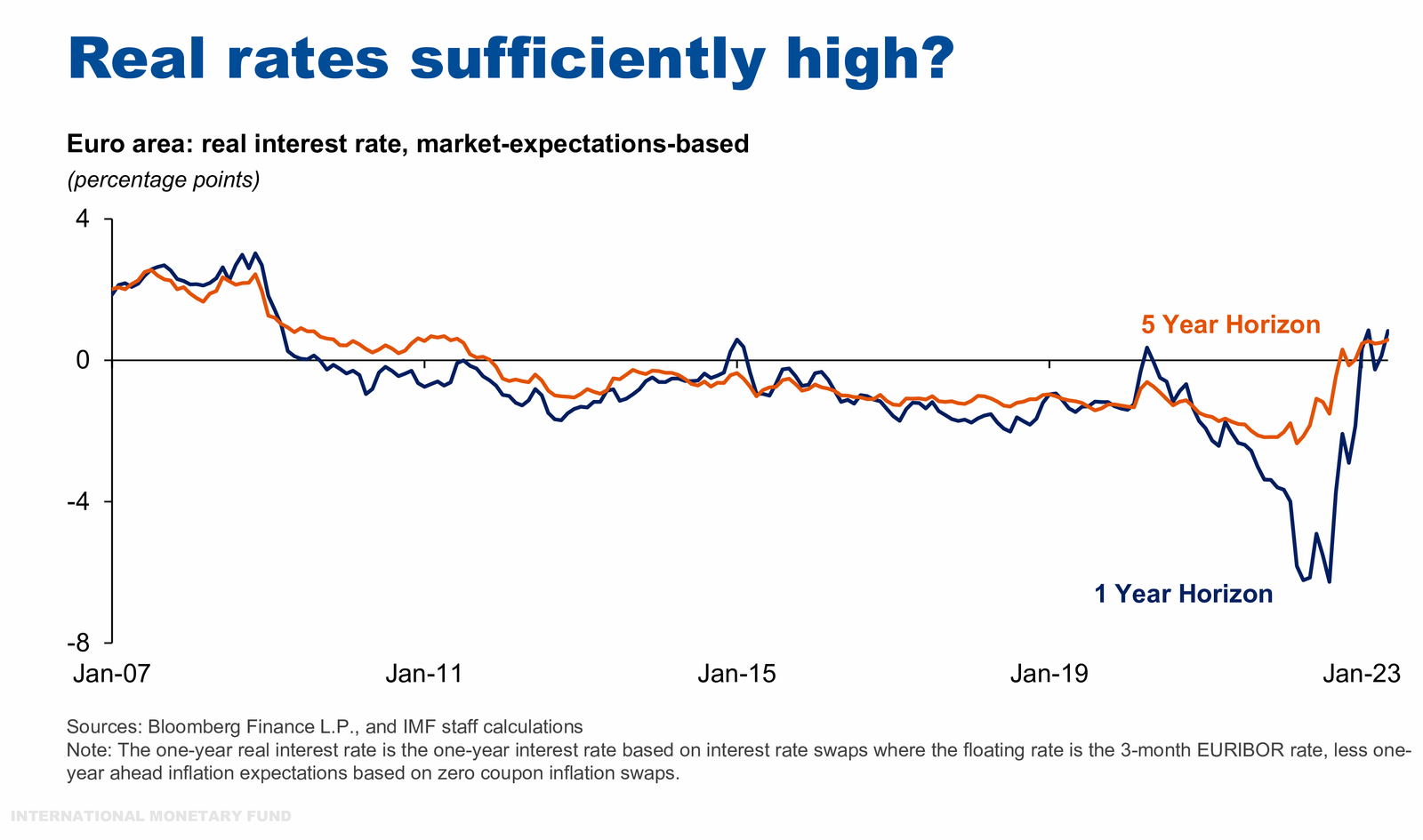
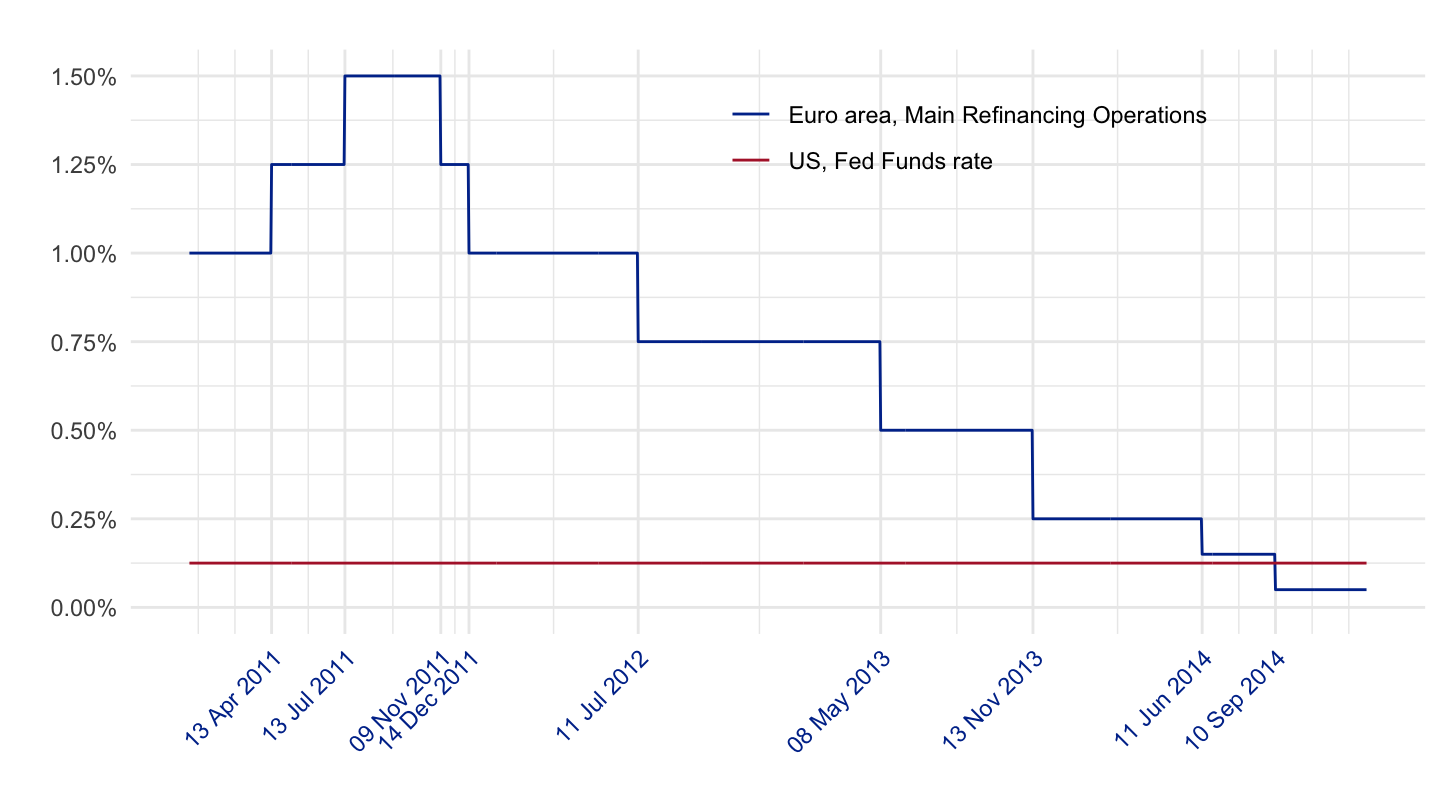
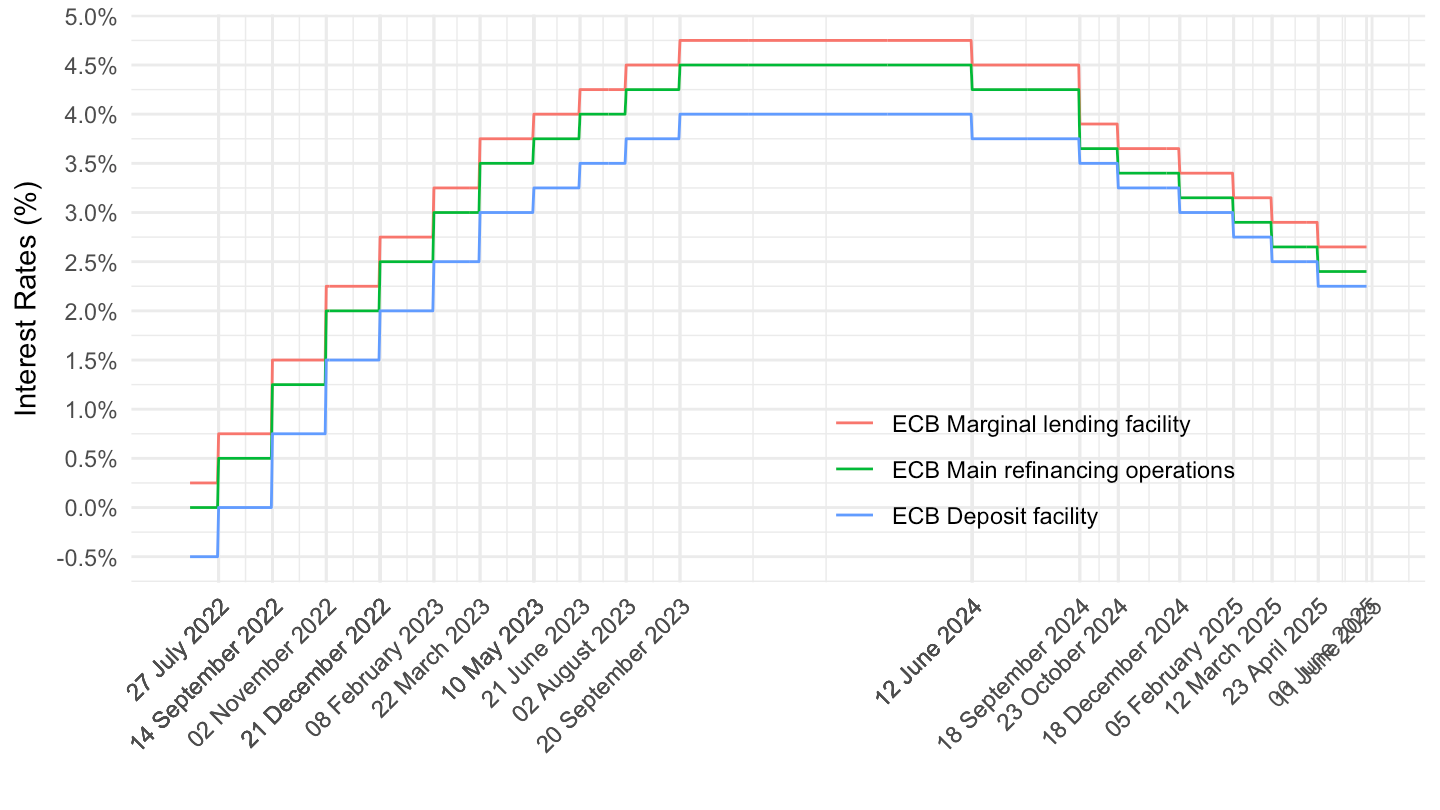
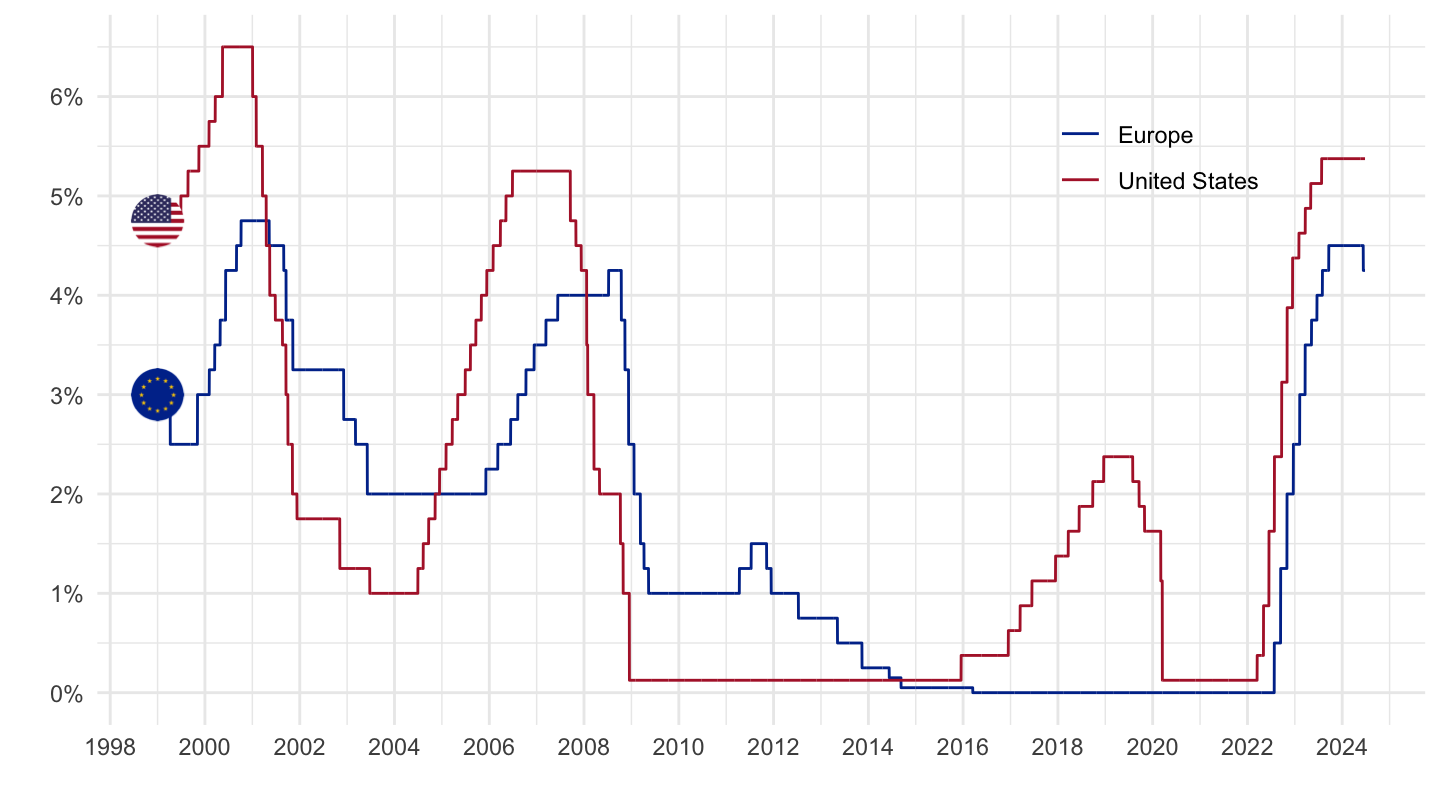
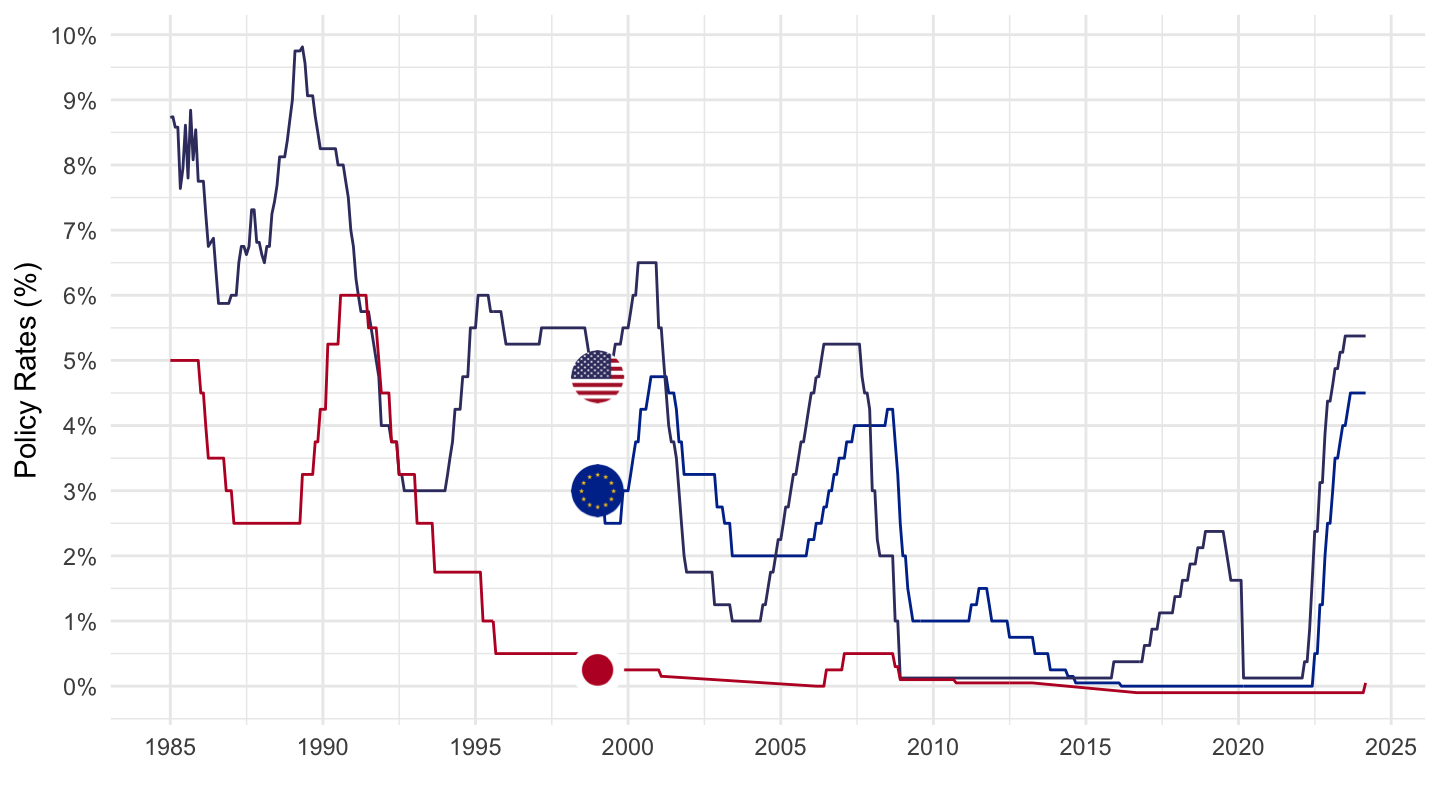
ECB has justified its actions in keeping real rates unchanged, so the stance of monetary policy.
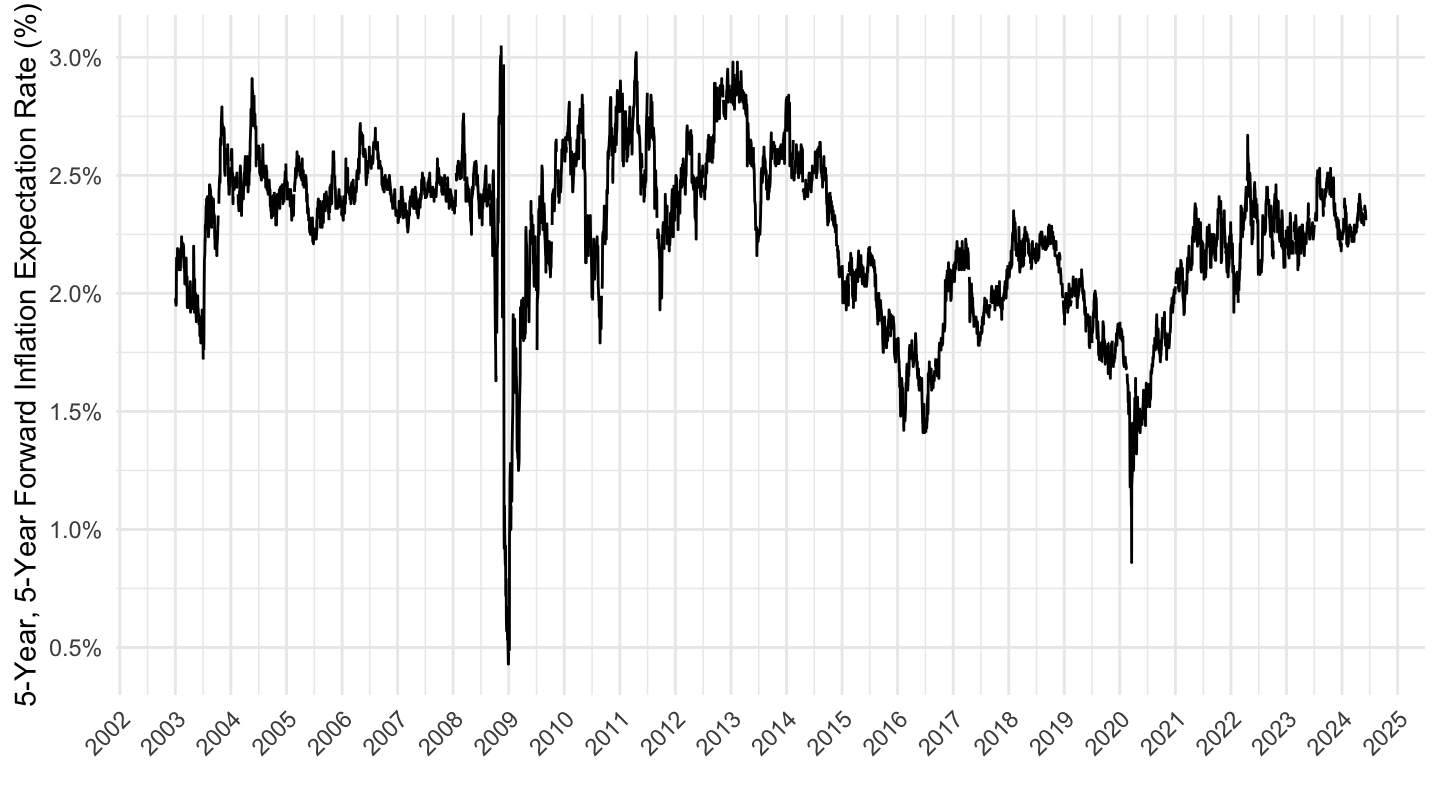
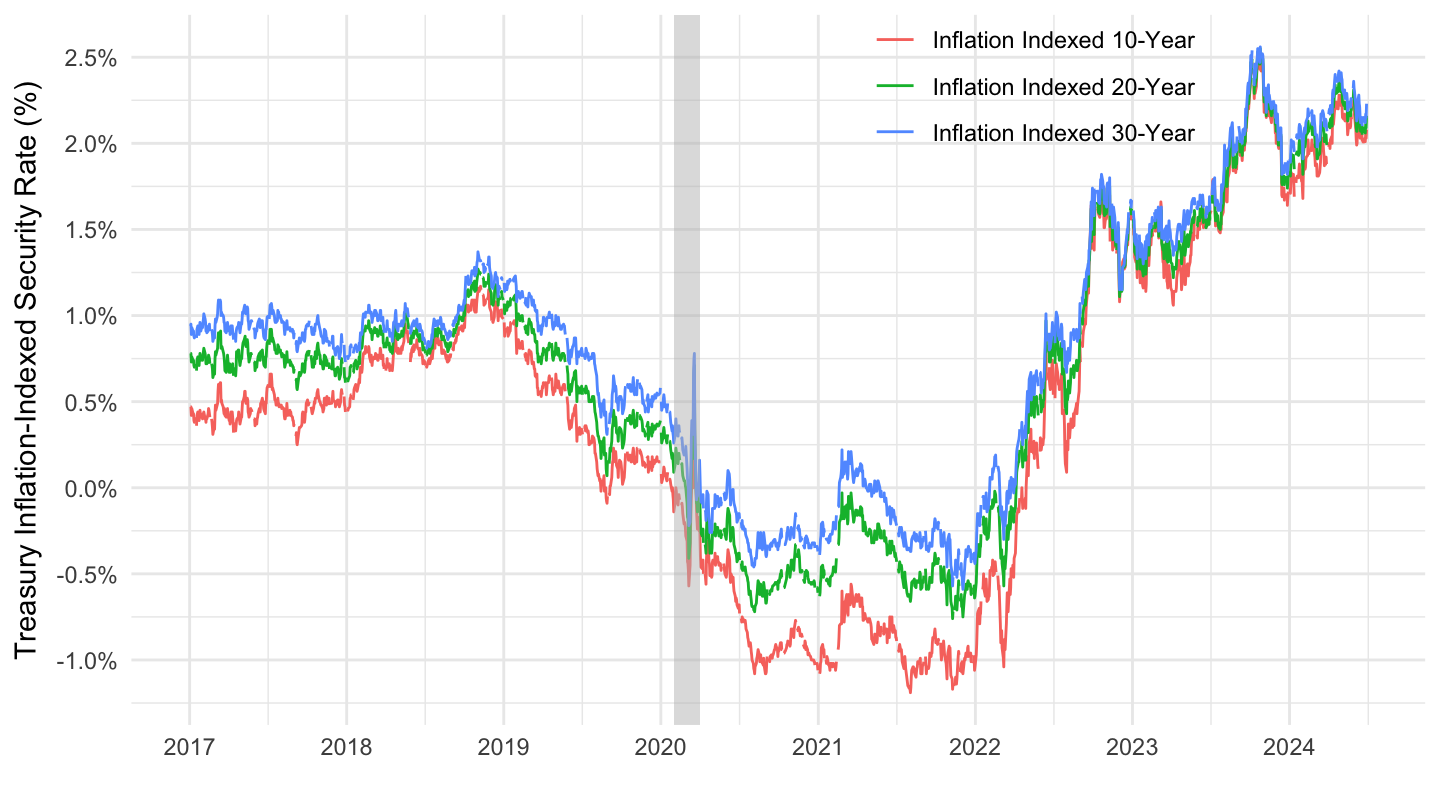
Measure of expected inflation (on average) over the 5Y period beginning 5Y from today.
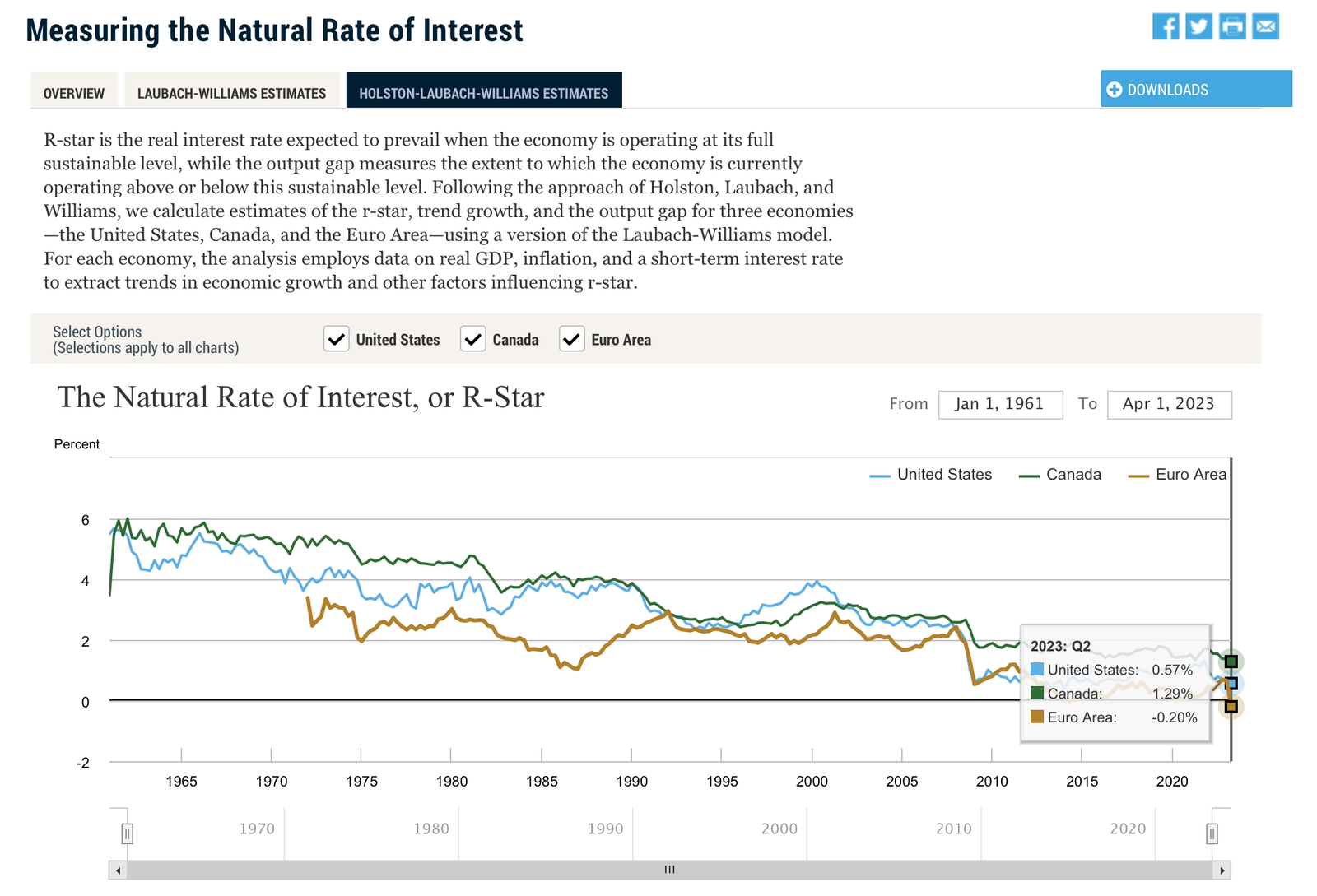
Estimates of “natural rates” or “r-star” even appear in Fed minutes.
As a consequence, financial markets have become intereted in the concept of a “natural rate”. (even if they are skeptical, since the Fed is probably the largest financial market participant)
Even outside of the NK model, there is a view that only real rates should matter. We even teach this to undergraduates.
It also has implications on monetary policy, at a very basic level.
It’s probably one reason why central banks feel compelled to raise interest rates when inflation increases, whatever the source. Central bankers are told higher inflation makes the stance of monetary policy more expansionary.
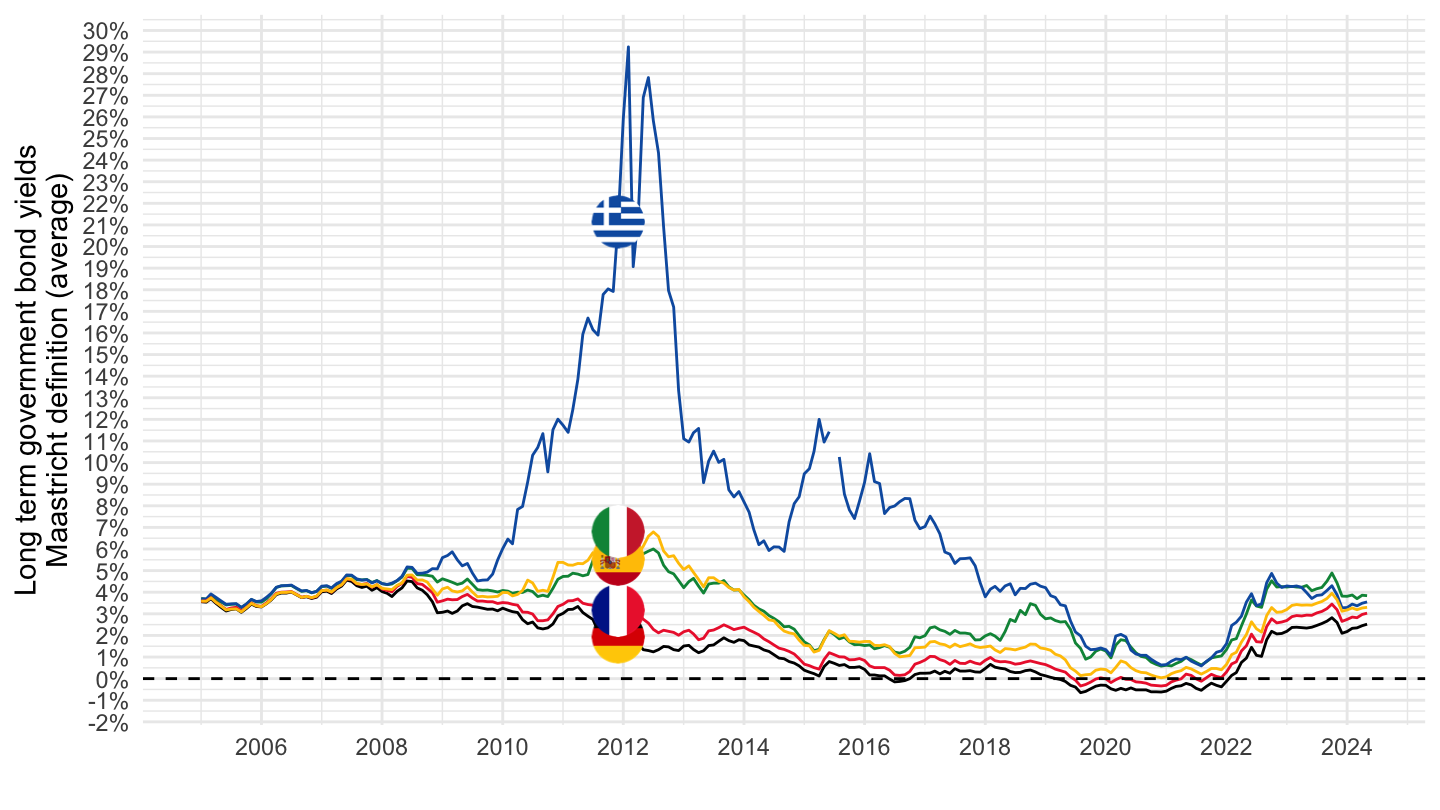
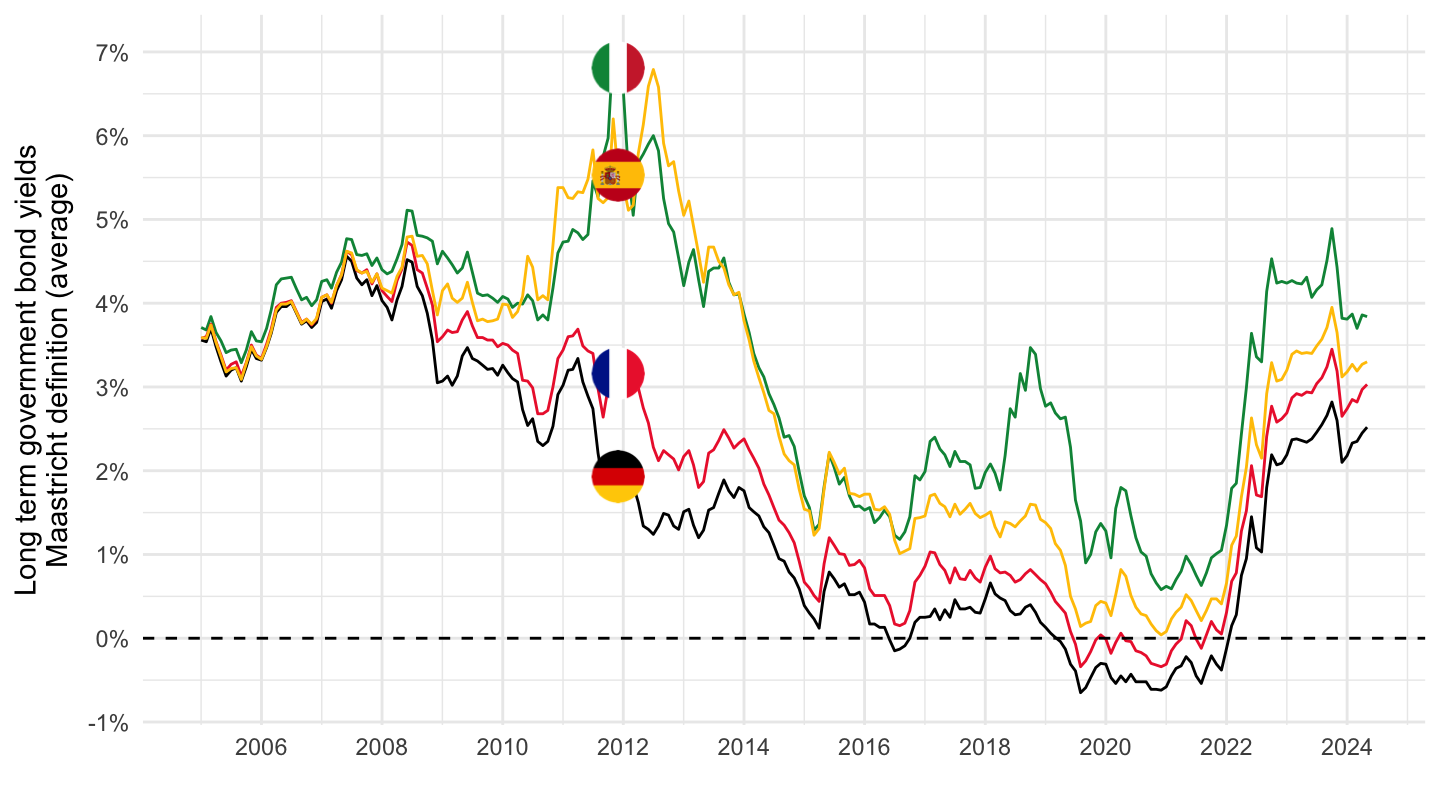
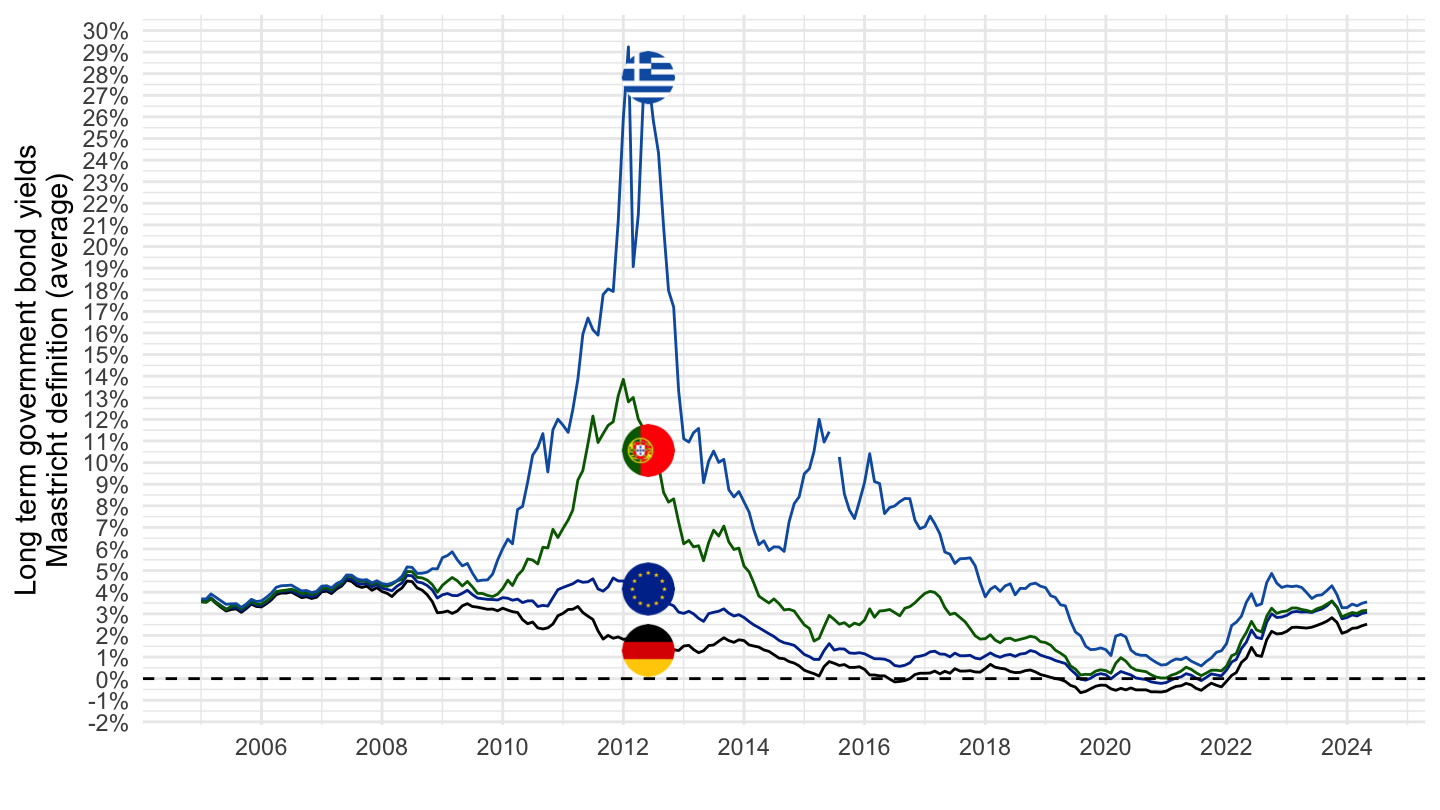
Nominal rates matter a lot for governments: through fiscal rules. Nominal rate increases \(\Rightarrow\) lower primary surpluses.
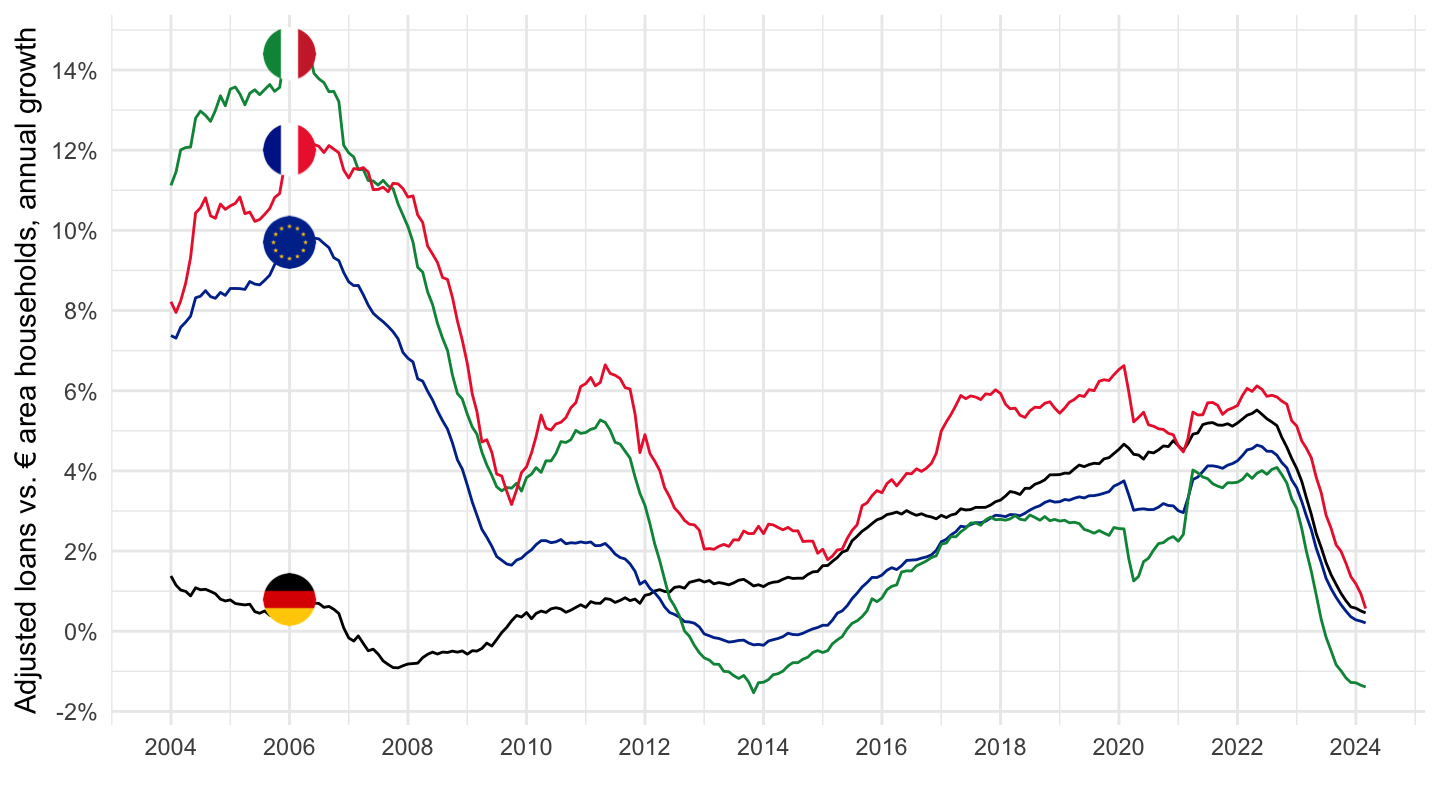
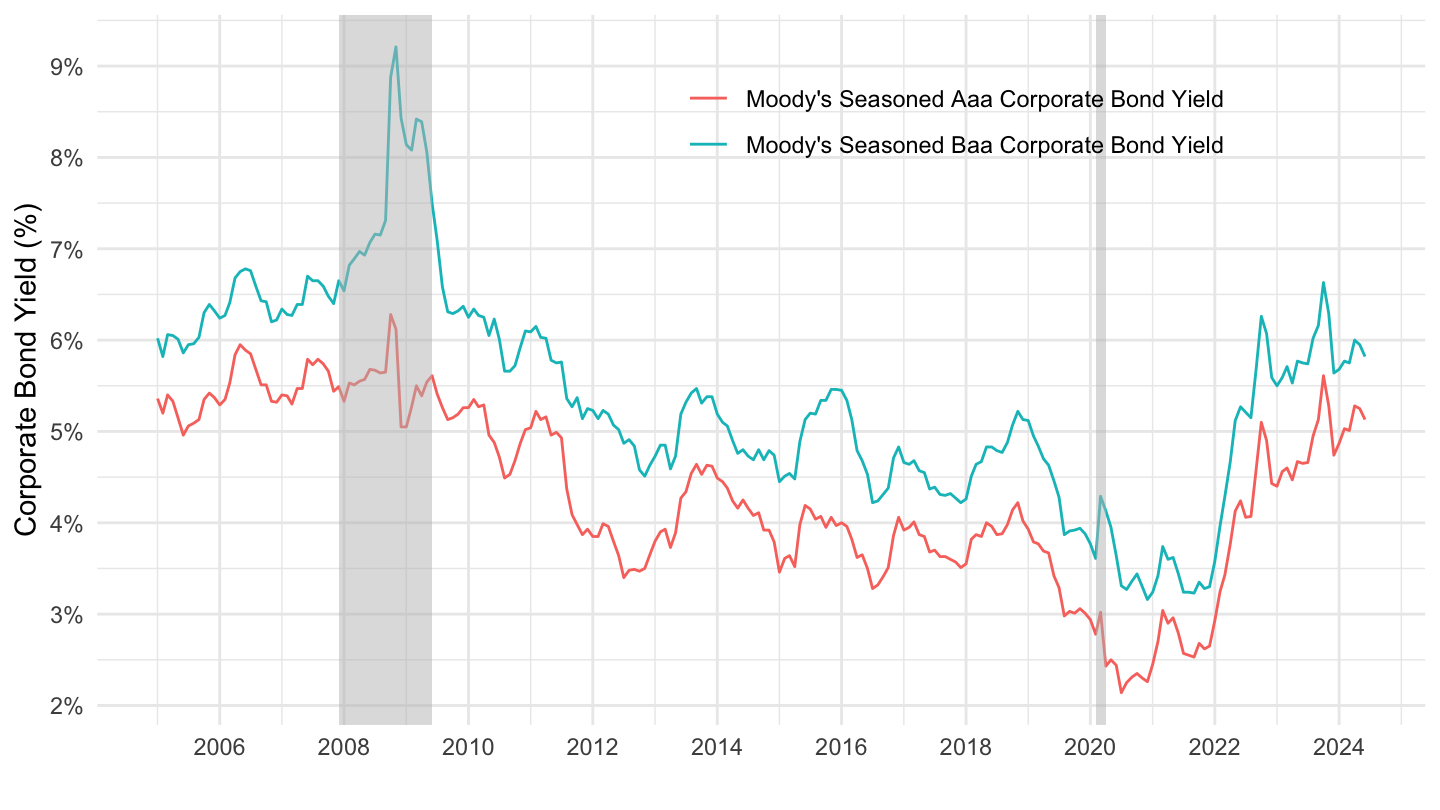
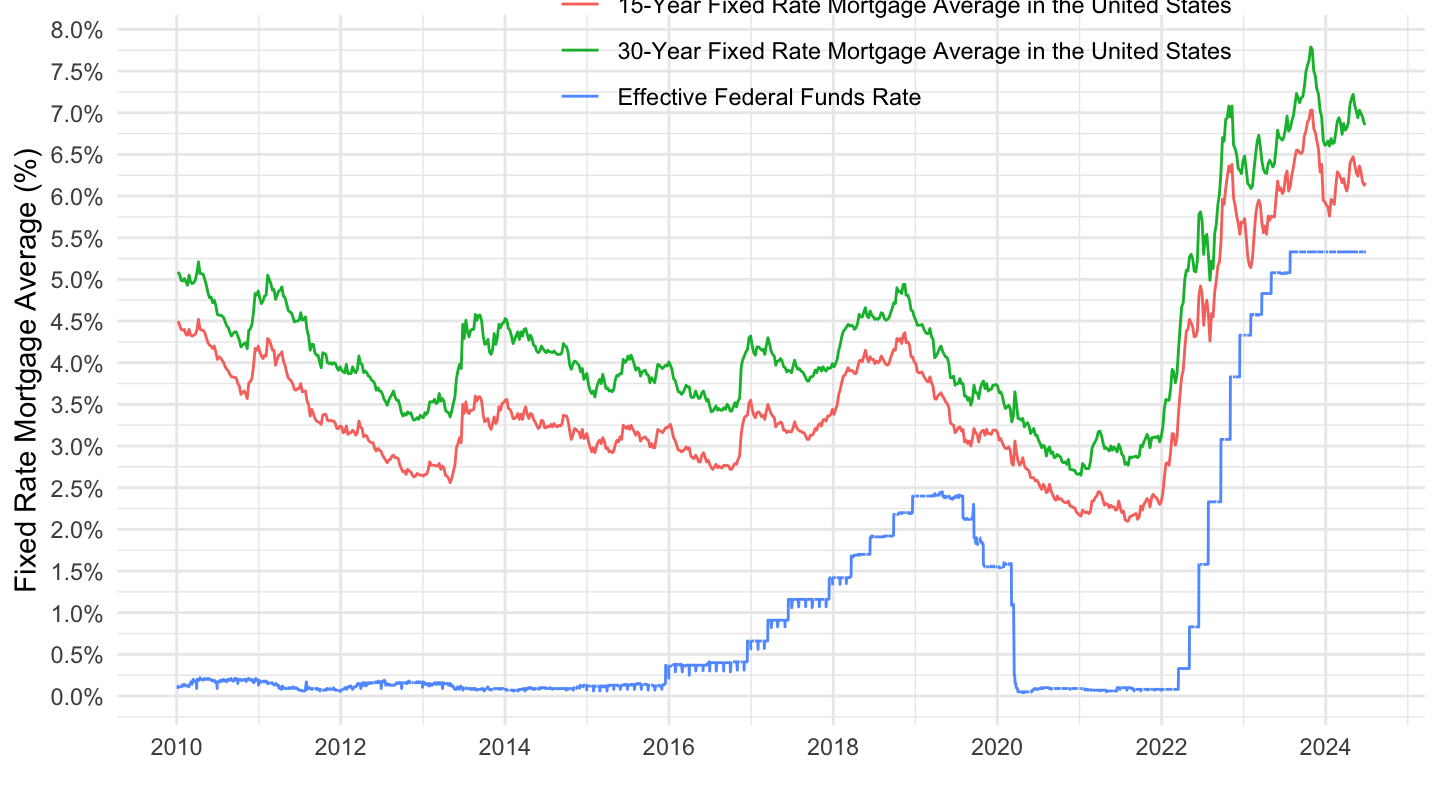
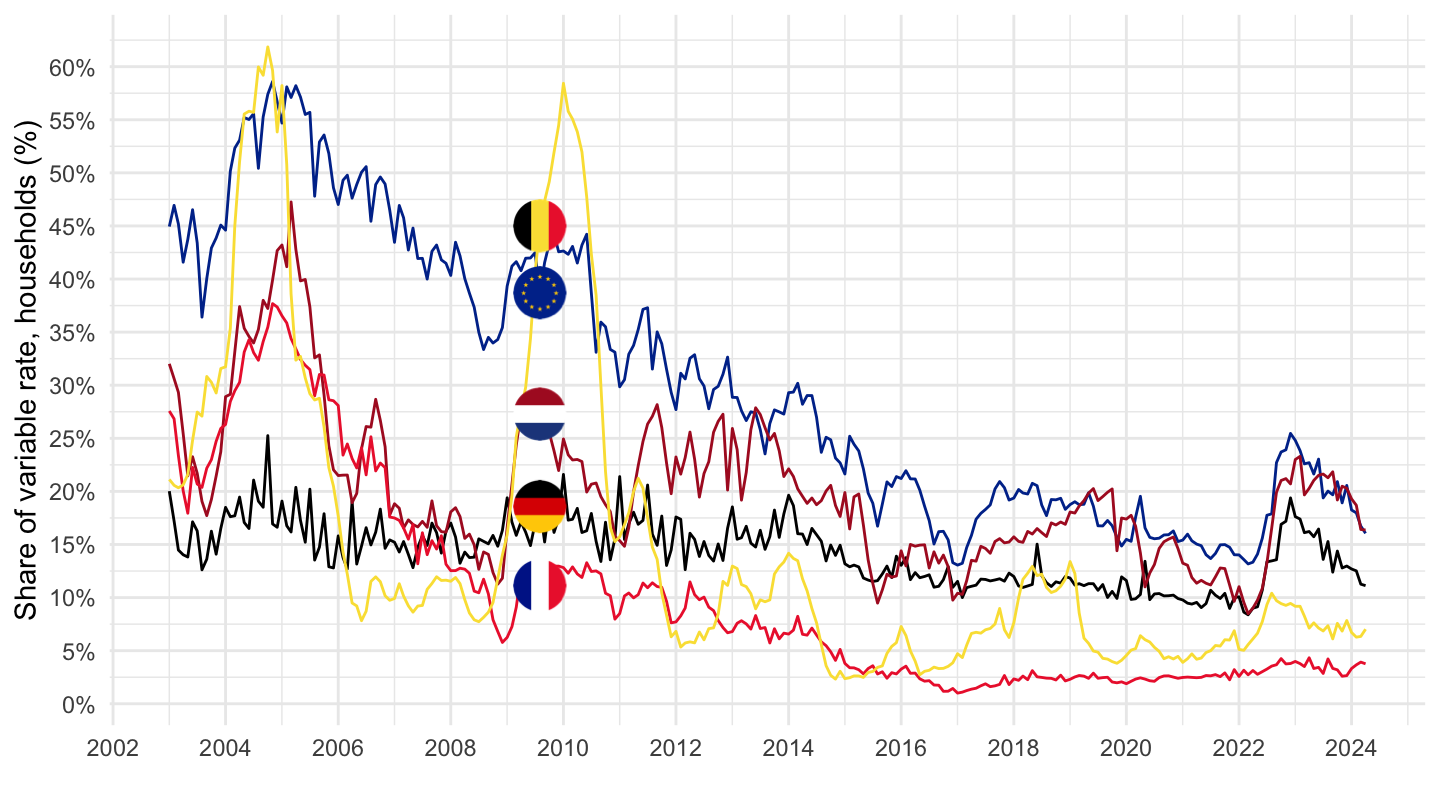
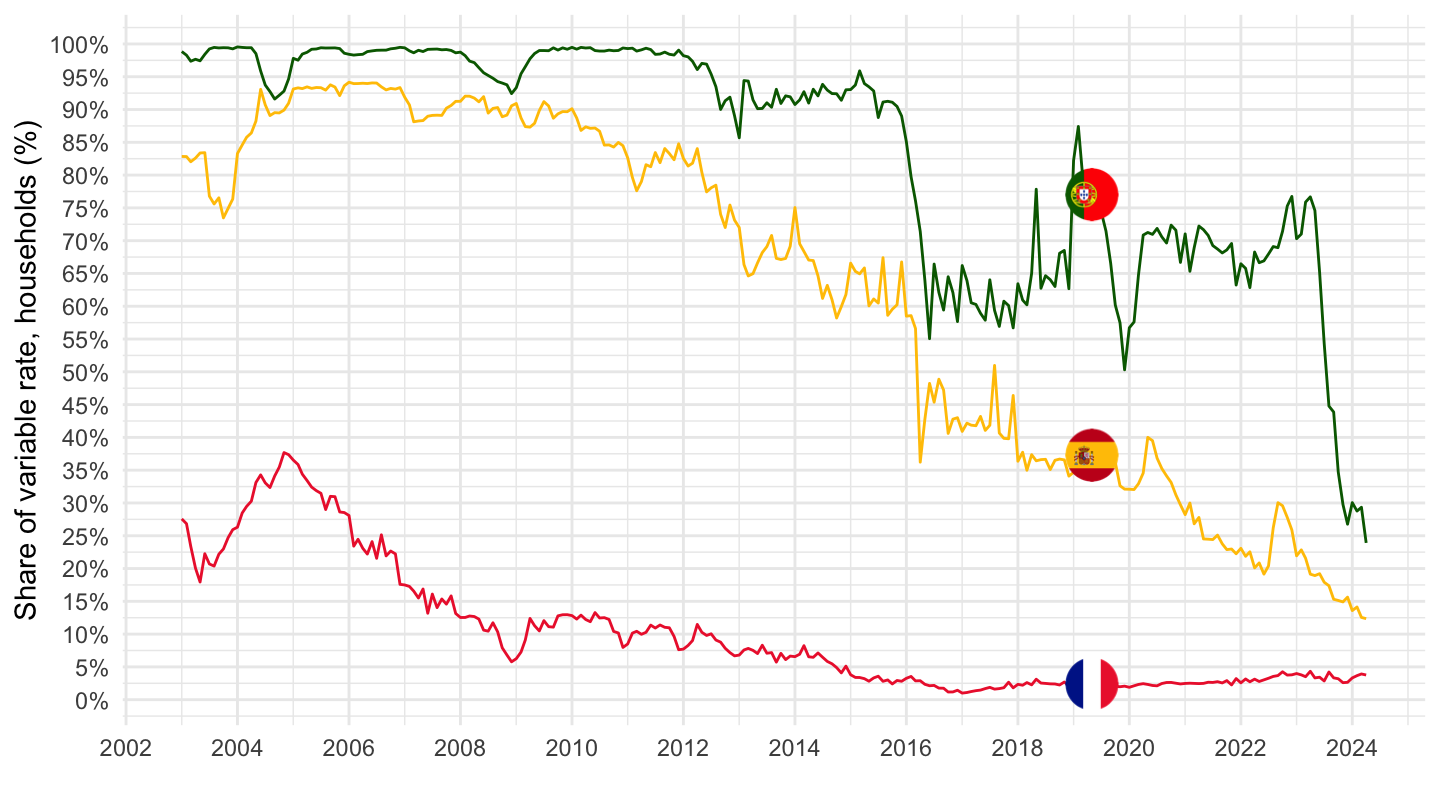
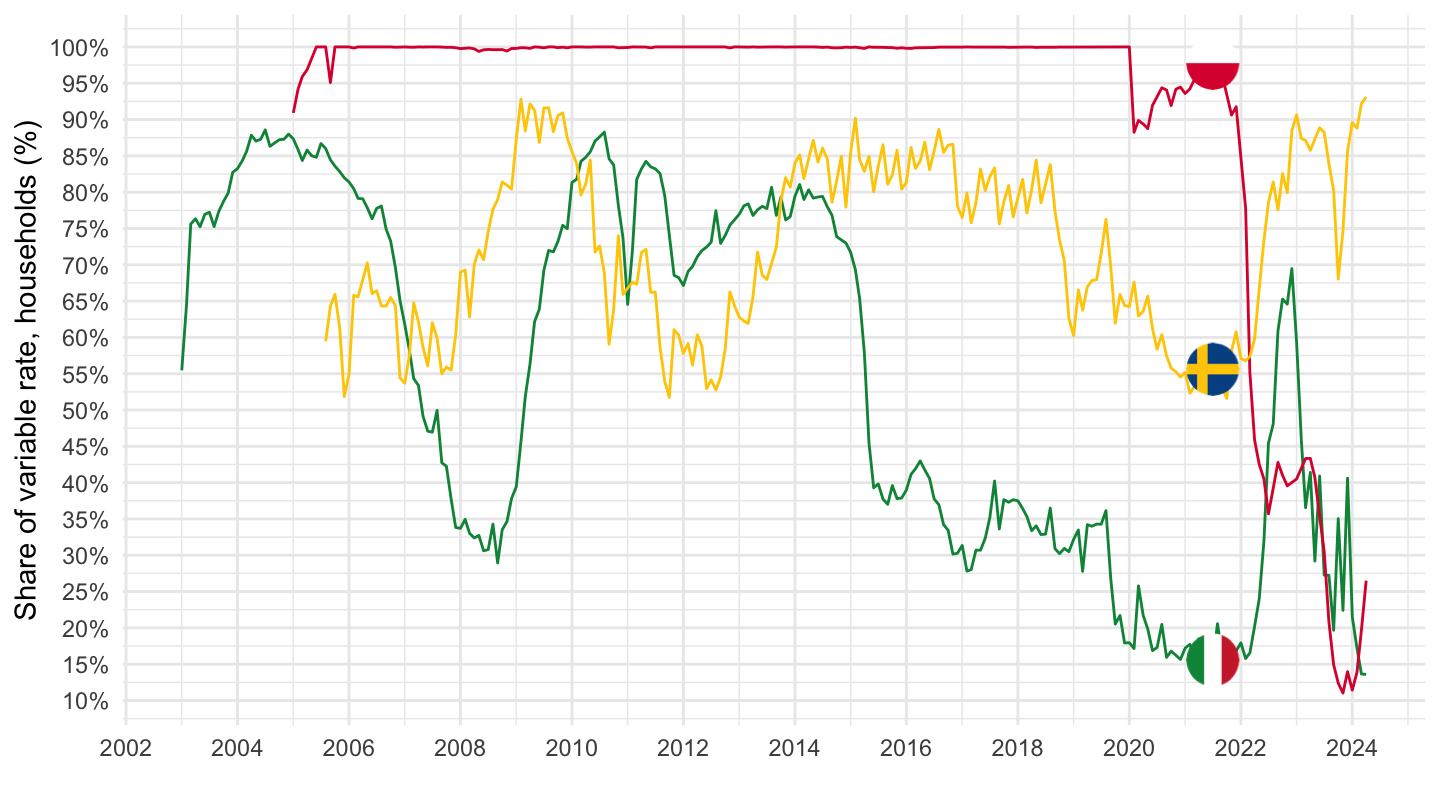
Nominal rates also matter for households through adjustable rate mortgages. Adjustable rate mortgages in 2006-2009 as a case study.
Revisiting “housing wealth effect papers”. (most well-known is Mian, Sufi but it also applied to also other papers on housing wealth effects, including some of my own…)
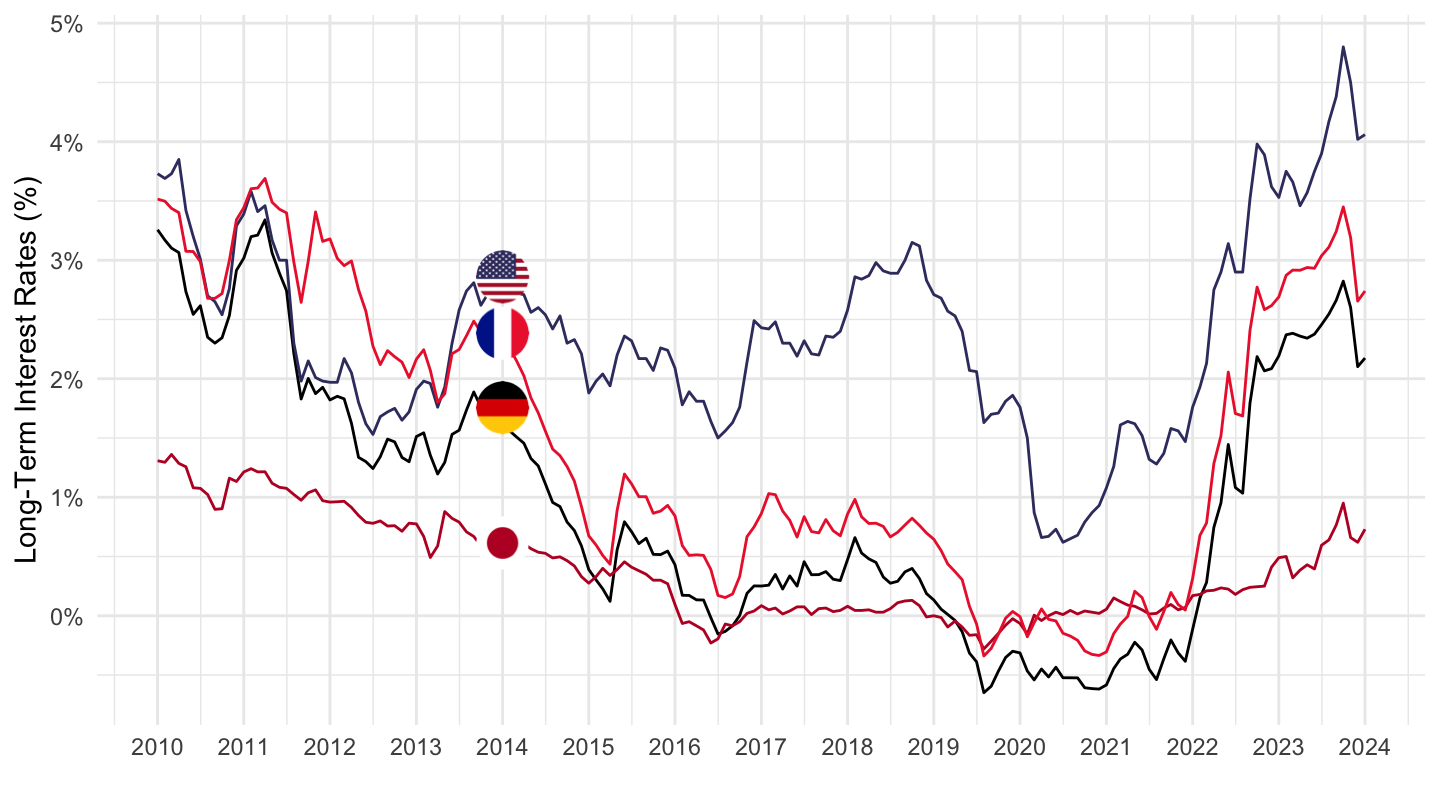
Nominal rates also matter for households through fixed rate mortgages: borrowing constraints depend on nominal rates, not real rates \(\Rightarrow\) Effects of nominal rates, not real on economic activity, notably lending and also construction.
In conclusion: the same real rates but with much more inflation are much less stimulative. Not necessarily a dovish comment: it was also true when inflation was lower. Monetary policy was much more accomodative than we thought.
\(G_t\) : nominal government spending at period \(t\), \(T_t\) : nominal taxes in period \(t\), \((G_t-T_t)\) the (nominal) primary deficit in period \(t\), which is the excess of government expenditures over taxes levied by the government.
Interest rate is \(i_t\), then the law of motion of government debt is given by:
\[B_{t}=(1+i_t)B_{t-1}+G_{t}-T_{t}.\]
\(Y_t\) nominal GDP. Assuming that nominal GDP grows at rate \(g\) + \(\pi\), we have that: \[\frac{Y_t}{Y_{t-1}}=1+g_t+\pi_t.\]
Therefore: \[\frac{B_t}{Y_t} = \frac{1}{1+g_t+\pi_t}\frac{B_{t-1}}{Y_{t-1}}+ \frac{i_tB_{t-1}}{Y_t} +\frac{G_{t}-T_{t}}{Y_{t}}.\]
Therefore: \[\frac{B_t}{Y_t} \approx \frac{B_{t-1}}{Y_{t-1}} - \underbrace{\pi_t \frac{B_{t-1}}{Y_{t-1}}}_{\text{Inflation tax}} - g_t \frac{B_{t-1}}{Y_{t-1}} + \underbrace{i_t\frac{B_{t-1}}{Y_t}}_{\text{Interest payments}} +\underbrace{\frac{G_{t}-T_{t}}{Y_{t}}}_{\text{Primary Deficit}}.\]
Whether one should include the “growth tax” term can be debated.
However there is no question that bondholders receive nominal interest payments, but also pay an inflation tax by holding government bonds.
Weird to take one into account (interest payments) and not the other one (interest payments).
Yet this is what we do. So nominal interest rates matter !
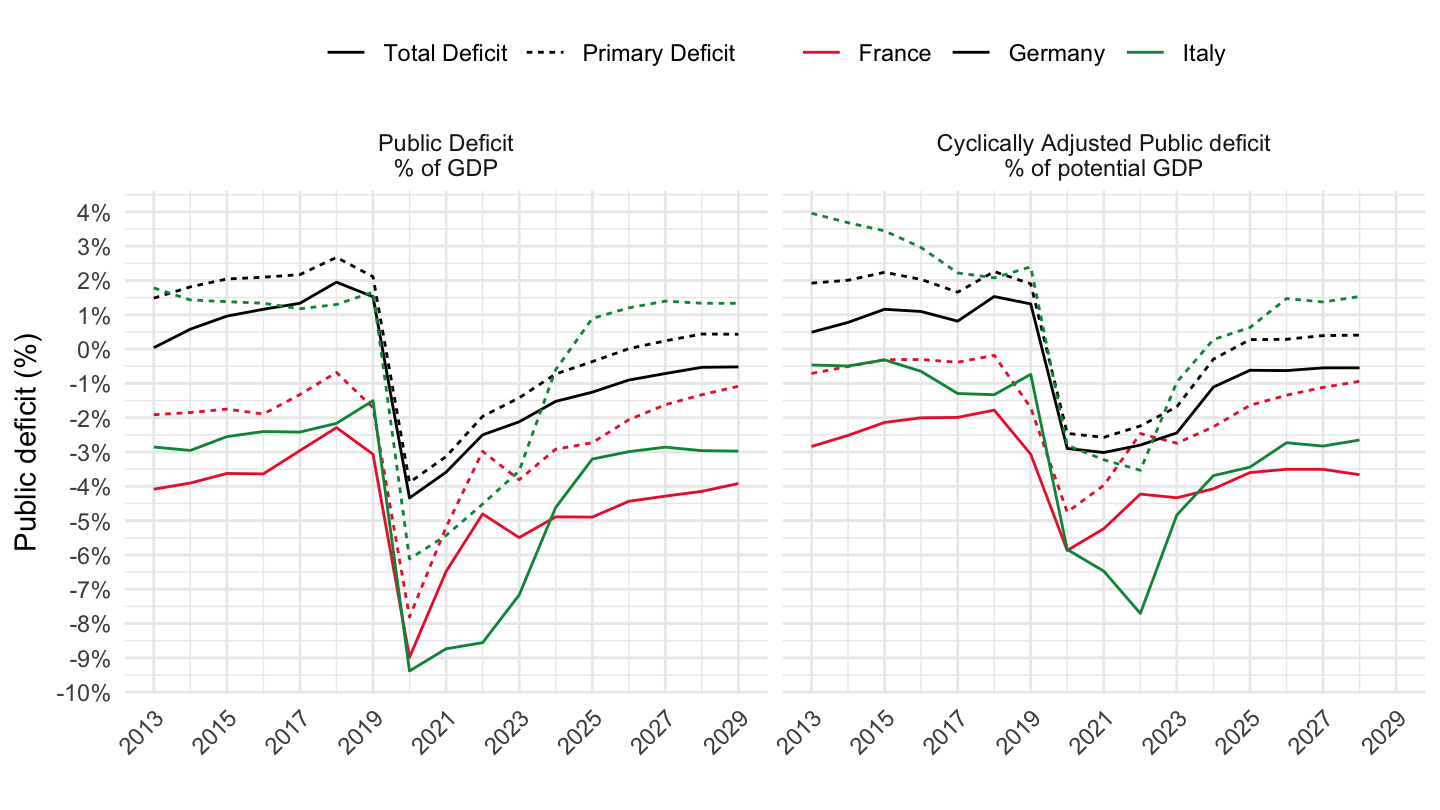
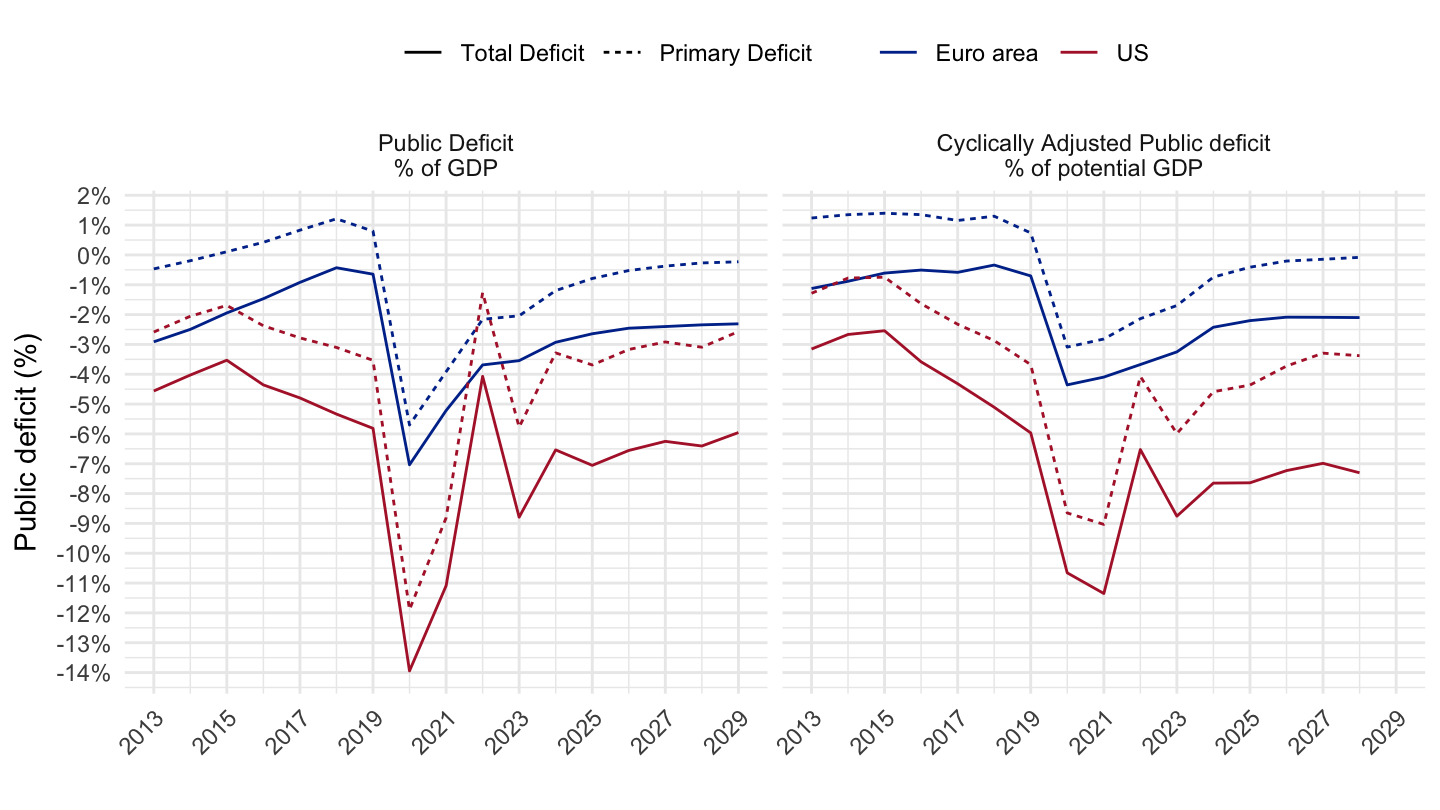
European Maastricht: Total Deficit \(\geq\) -3% of GDP.
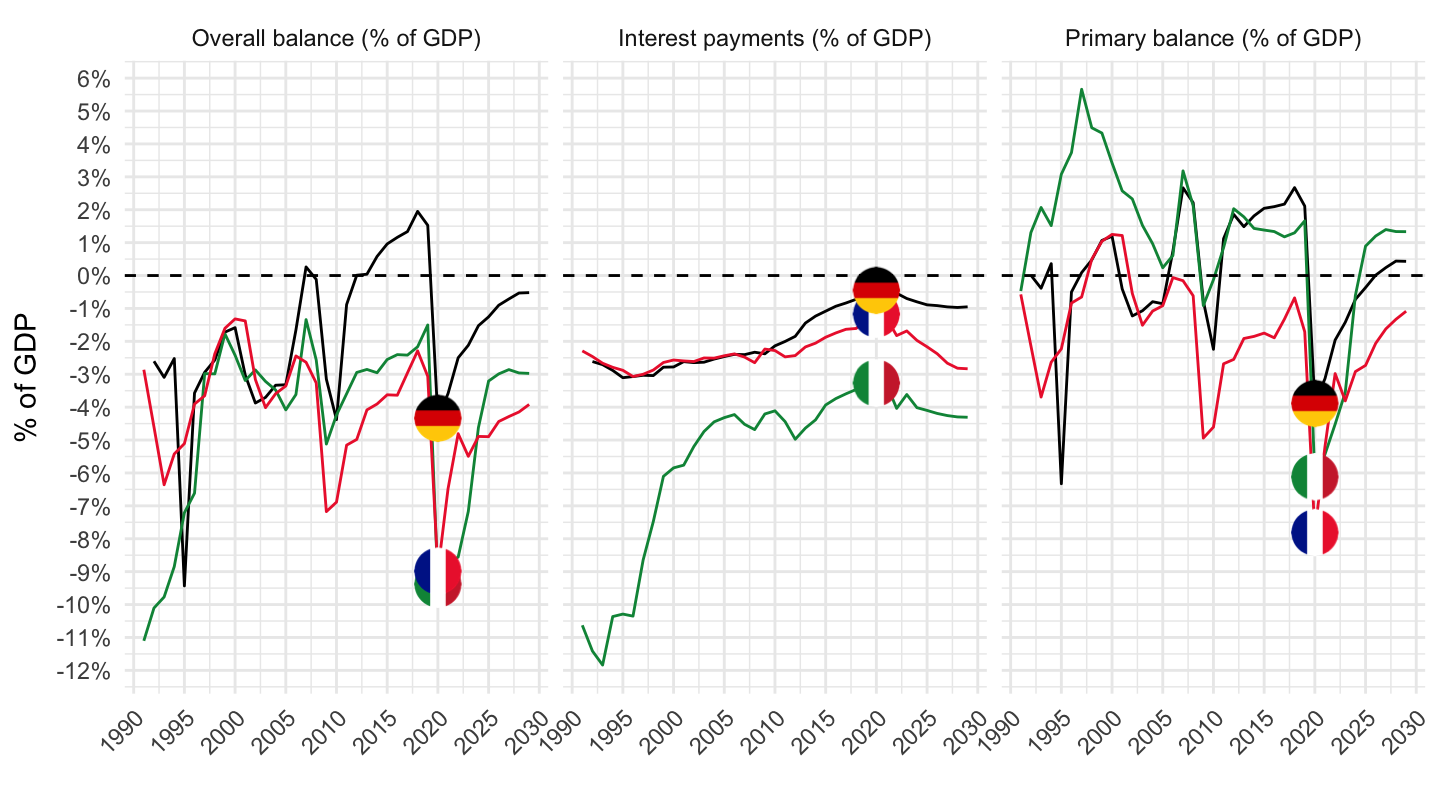
Total Deficit = Interest Payments Deficit + Primary Deficit.
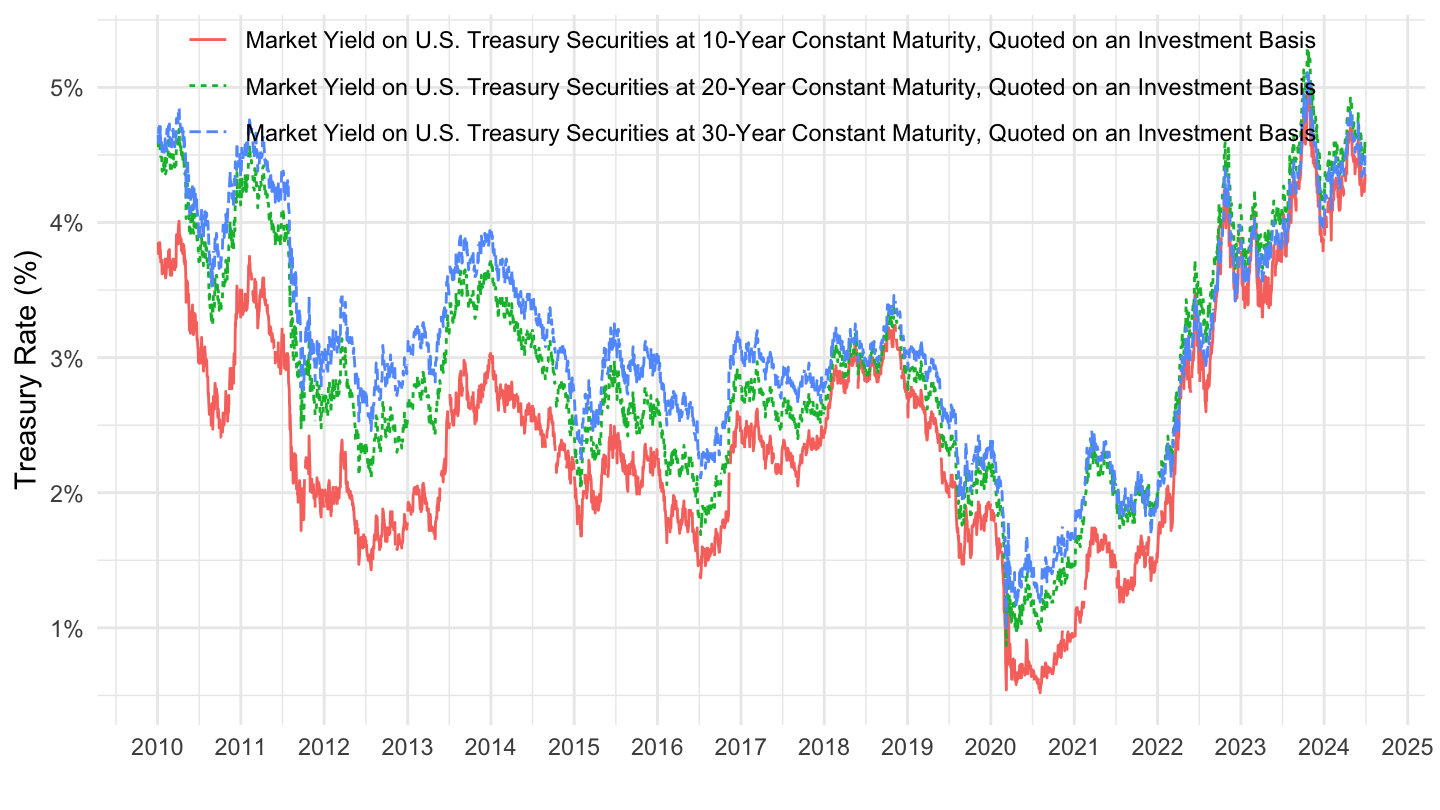
Higher nominal rates \(\Rightarrow\) Higher interest payments (% of GDP).
Dividing interest payments by nominal GDP does not help.
Problem is: inflation tax is not counted as a resource for the government, while it should. Debt / GDP are going down while total deficit / GDP is going up. 2% of GDP.
Depends on maturity of the debt.
Debt = 100% of GDP (we should say 1 year of GDP). Average nominal rate: 1%.
1 % increase nominal rates \(\Rightarrow\) average nominal rate: 2% => +1% of GDP interest payments
3% Maastricht rule: primary deficit goes from -2% of GDP to -1% of GDP.
Raise taxes, reduce spending \(\Rightarrow\) Strong effects on aggregate demand, depending on your view of the multiplier.
Not just theoretical !
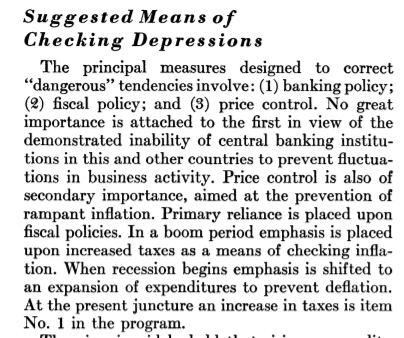
Restrictive monetary policy \(\Rightarrow\) Restrictive fiscal policy.
Fixed rates: constraints take the form of a mortgage payment / income constraint (say not more than 35%).
Problem: this constraint binds much more in an environment of high inflation. (even pure = price and wage inflation)
Intuition: with inflation, your current income represents less of your future income.
Another: with time, your ratio of mortgage payment/income goes down as inflation increases your income.
Financial constraints is much more binding with low inflation.
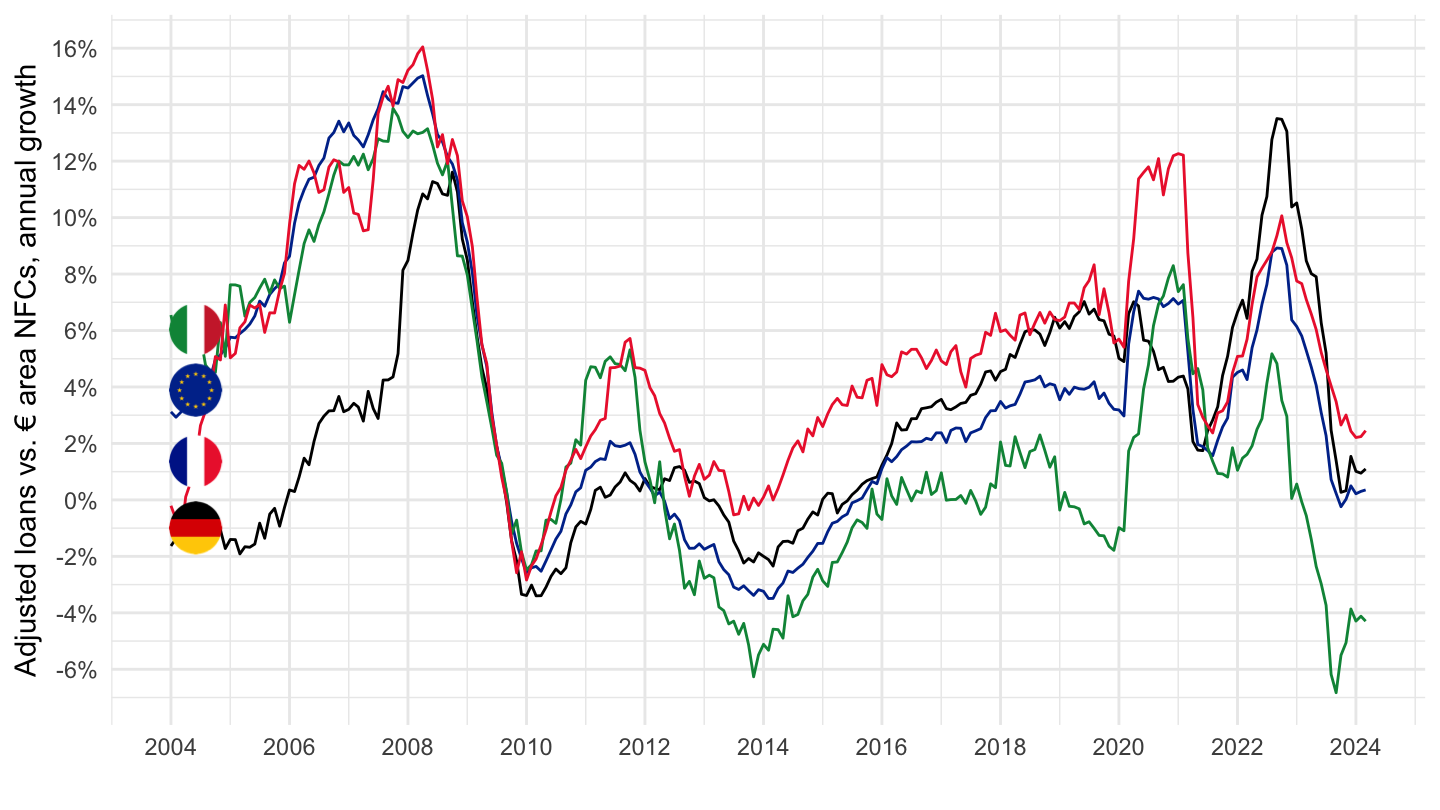
Nominal rates matter: True for governments, especially in Europe. Also true for households, both variable / fixed rates, through in different ways. Maybe true for corporations.
Need for more regulatory-type data on types of loans more precisely.
Perhaps need to give up on optimal contracting, and take these features as exogenous ? (for now ?) Extreme hetereogeneity across countries which seems very hard to explain.
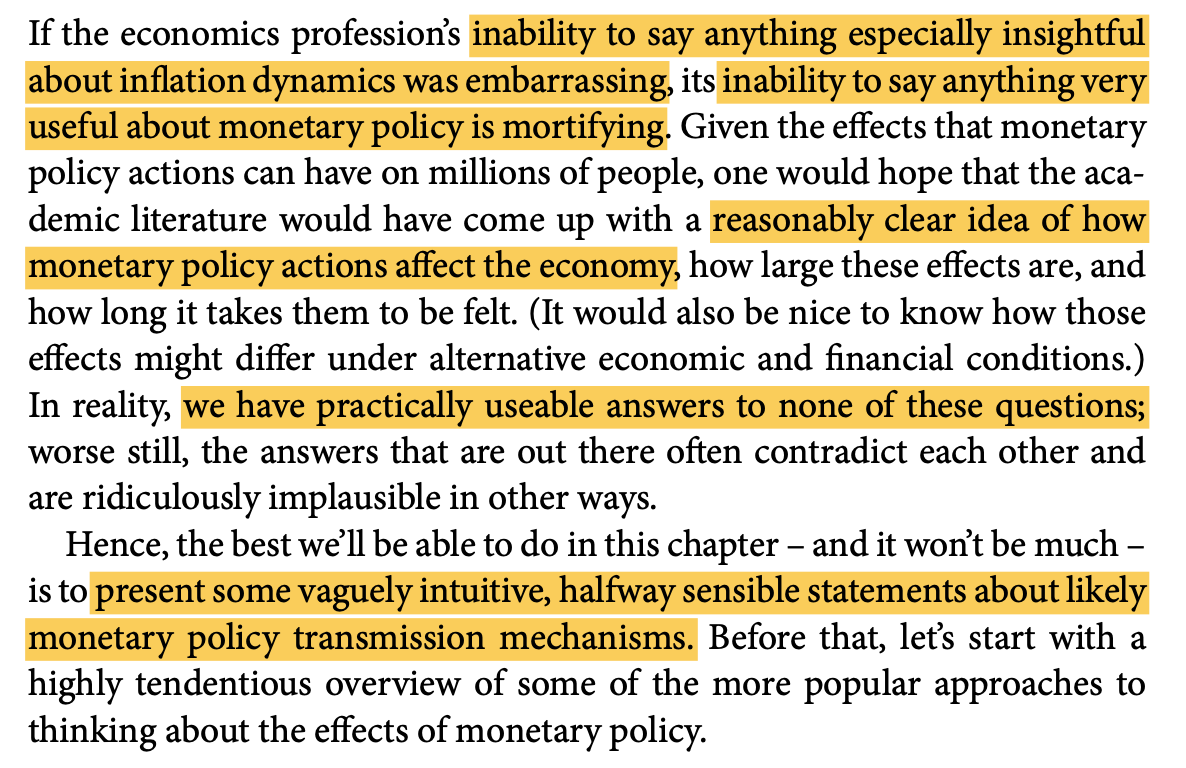
Increase in nominal rates can be recessionary even when real rates are falling, unlike what NK models say. (regardless of whether one looks at realized or expected inflation)
Stance of monetary policy might in fact be much more restrictive than we think.
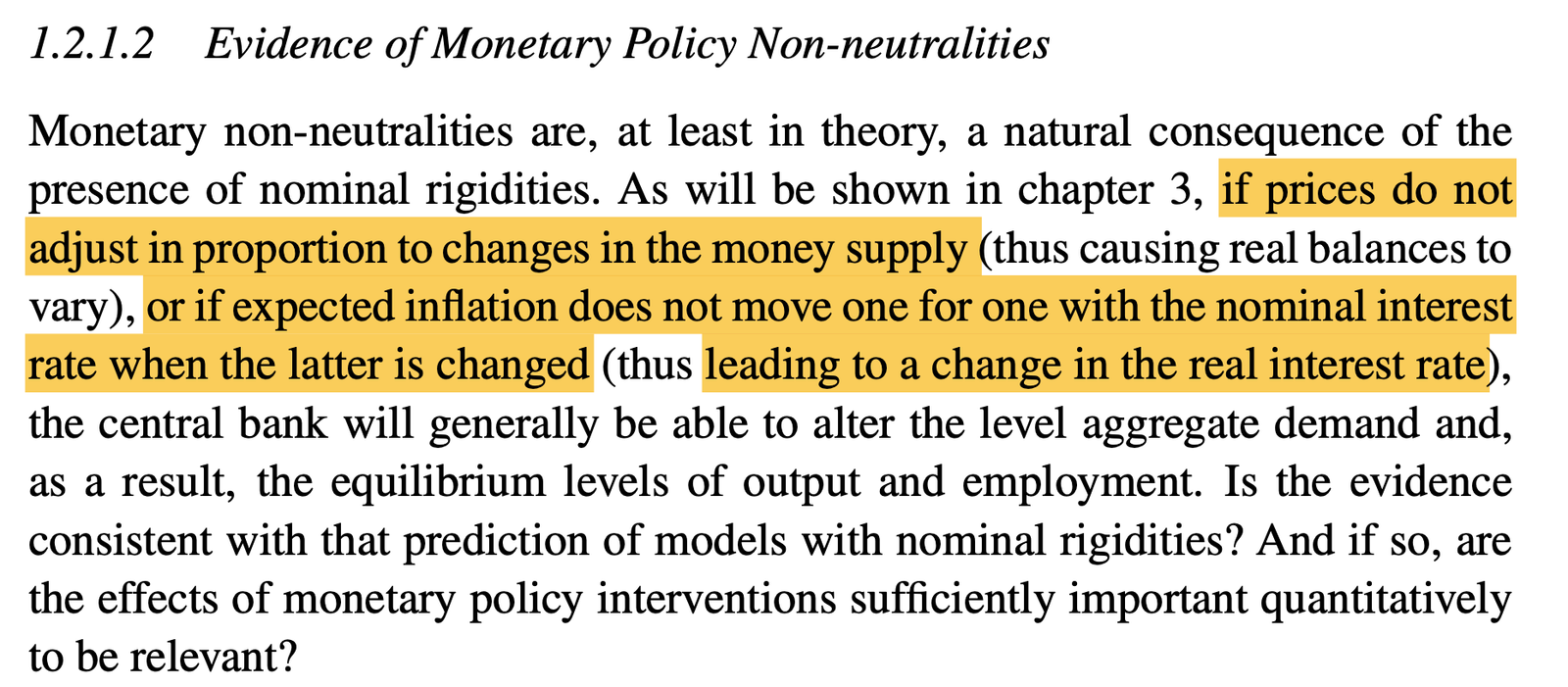
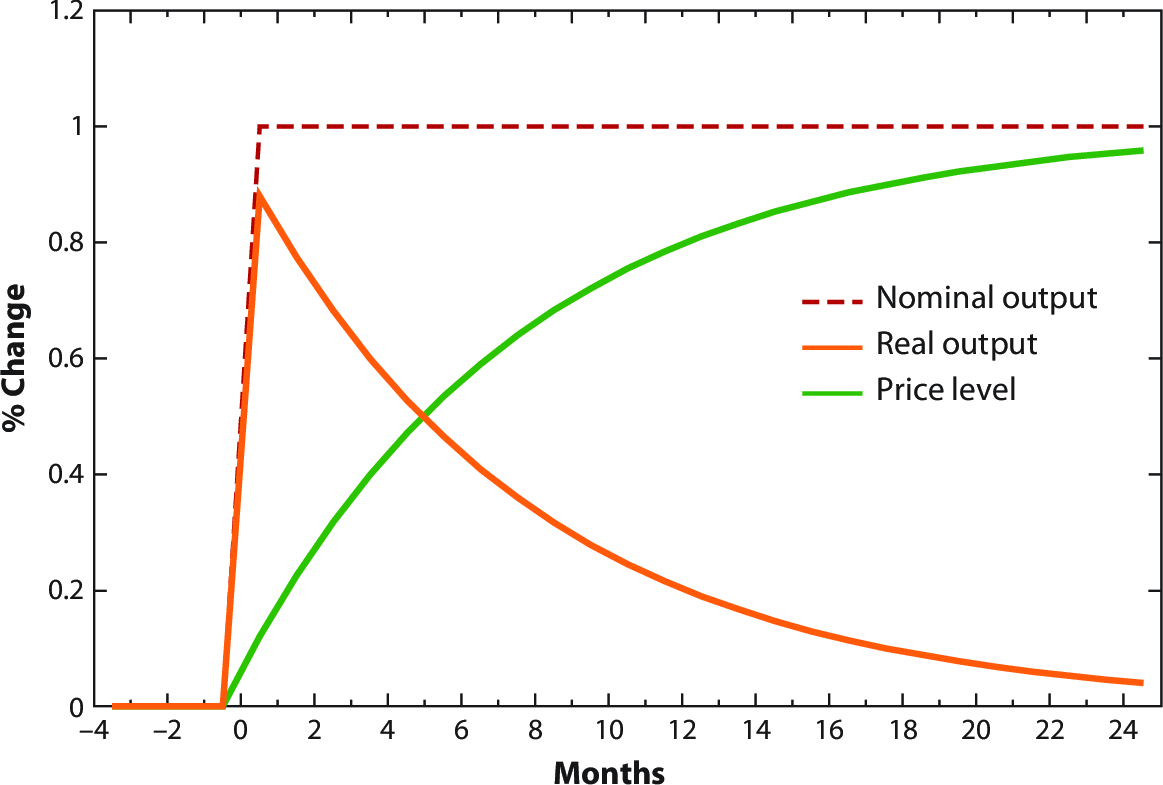
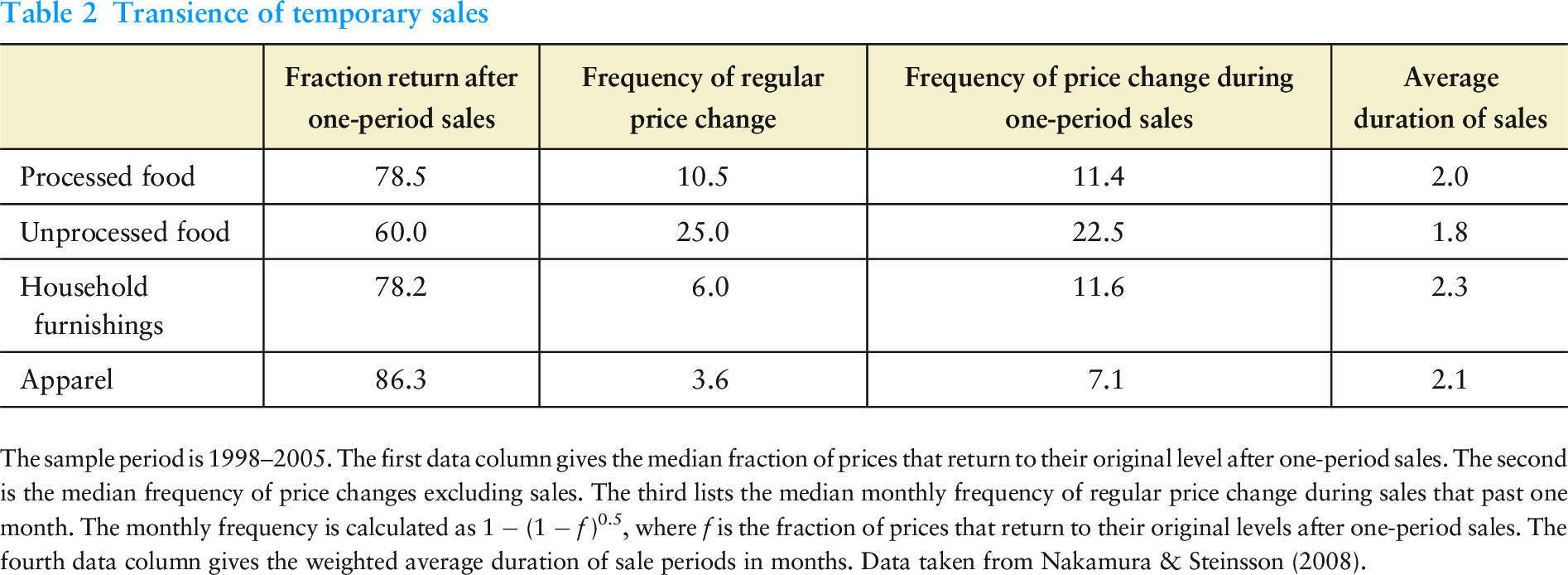
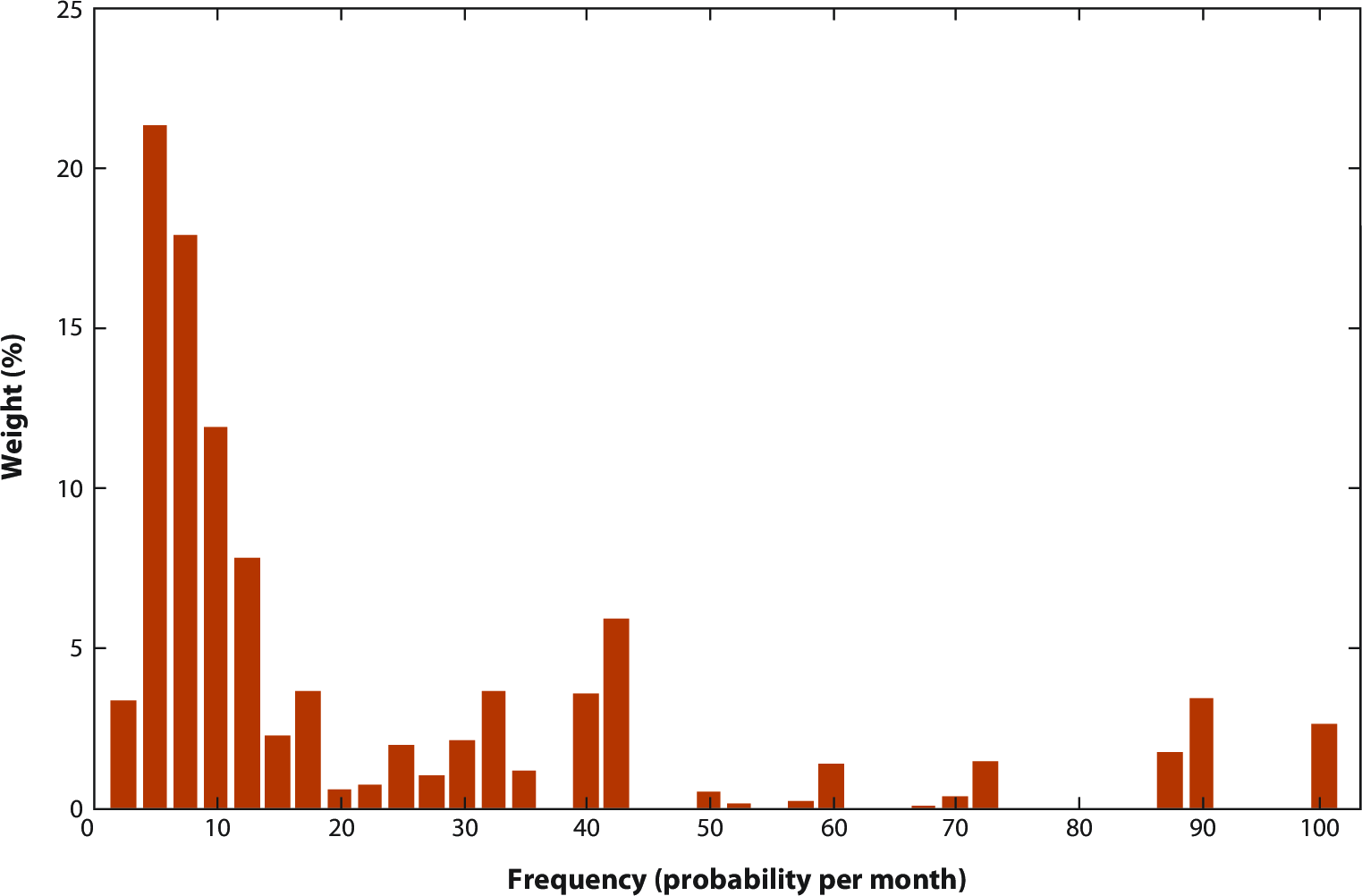
New-Keynesian economics rests on a stiky-price / wage assumption.
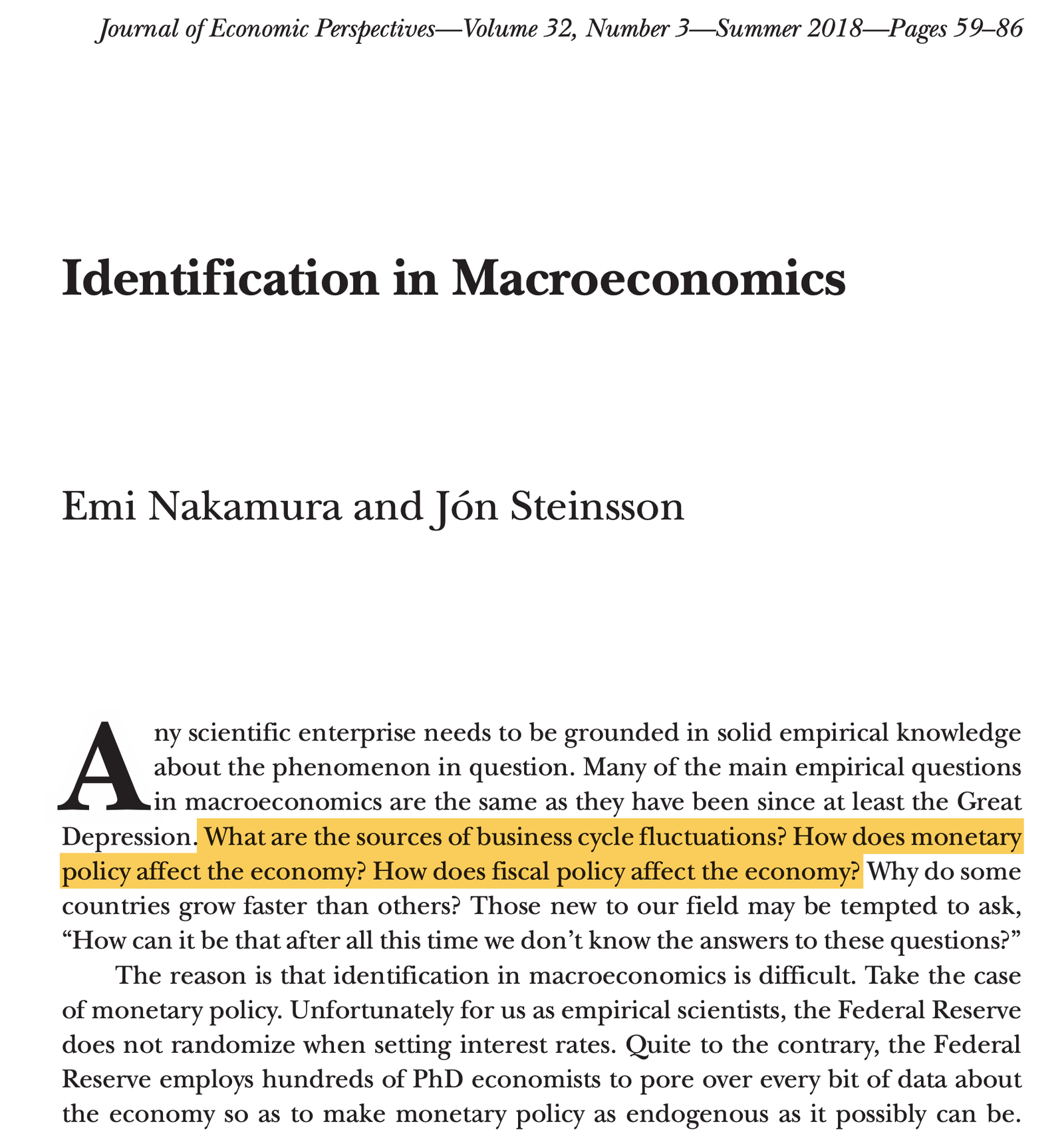
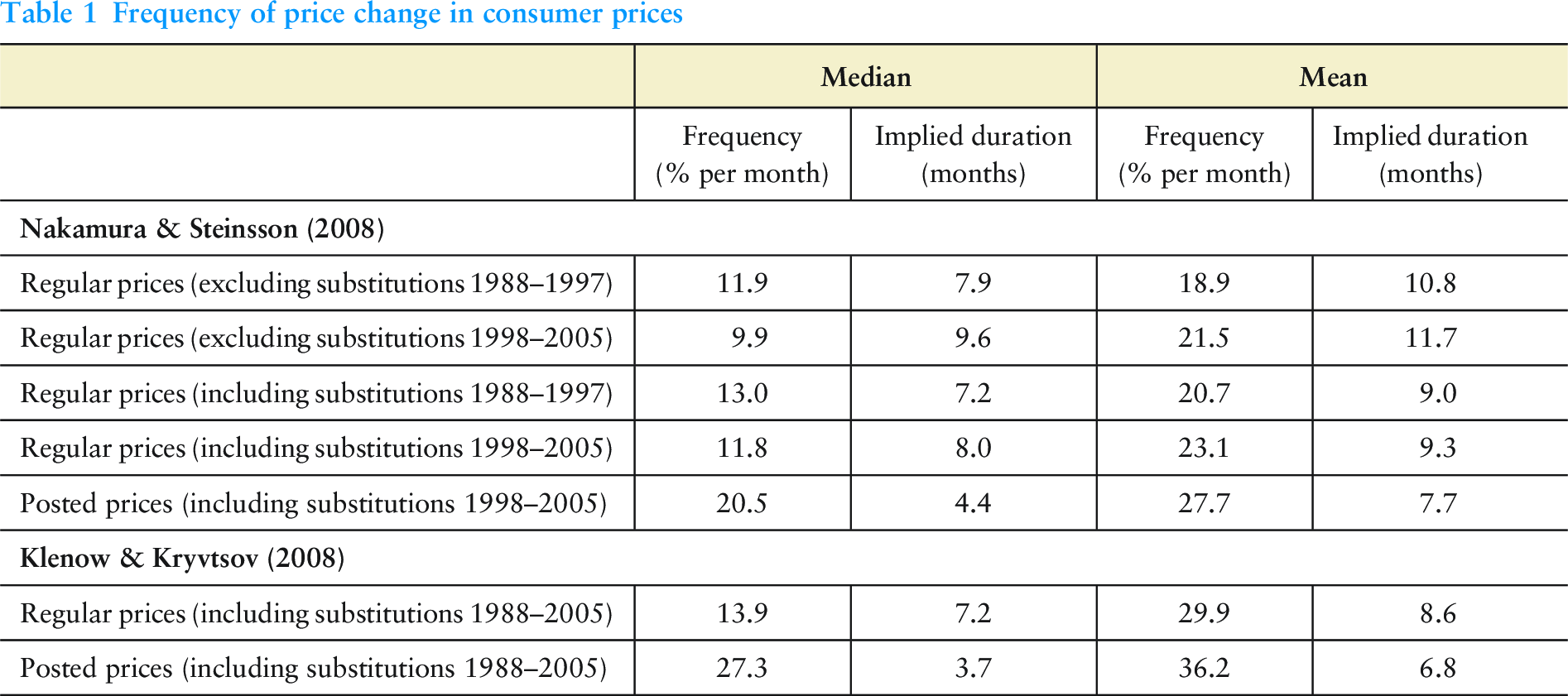
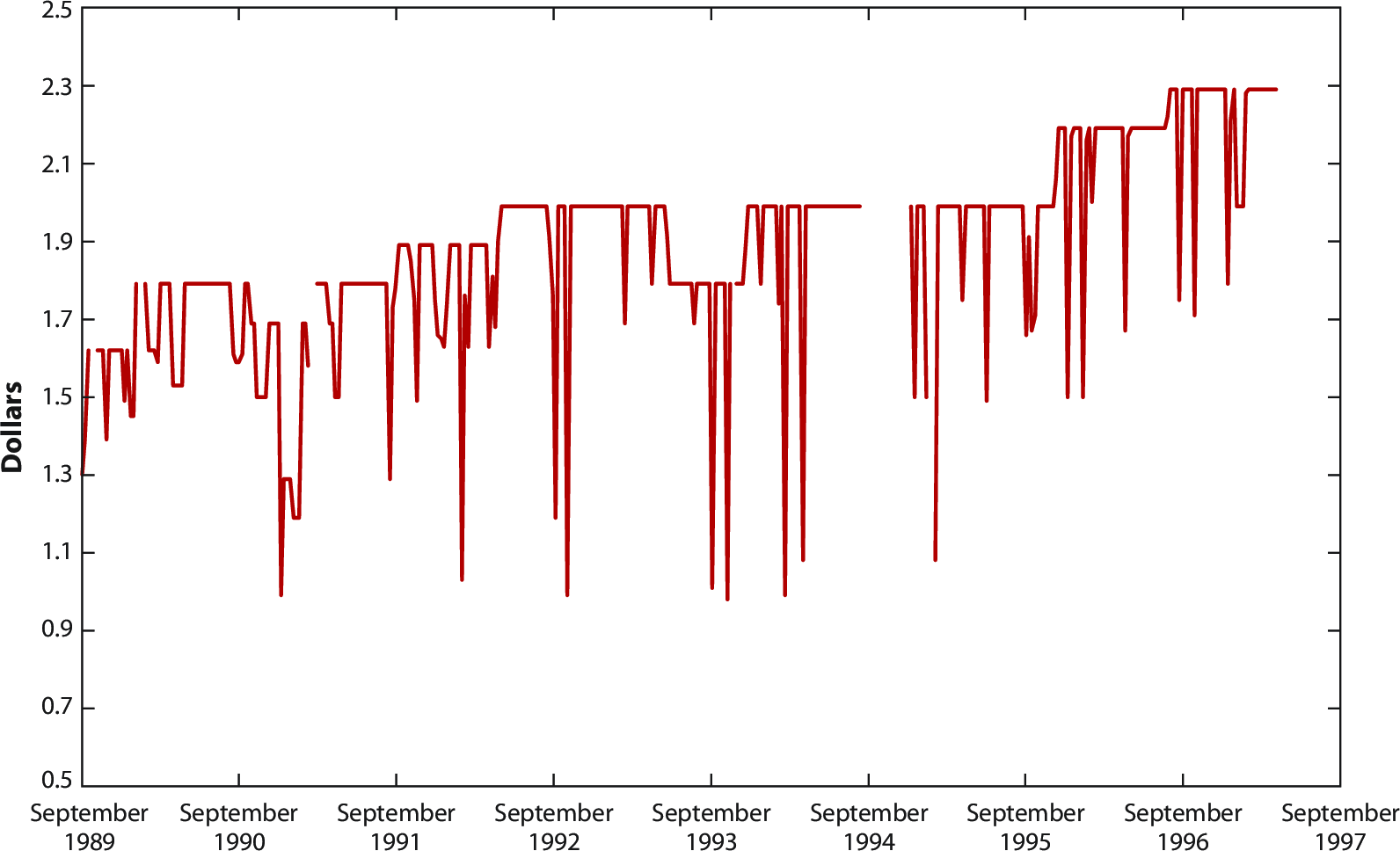
Yet there is in fact very little direct evidence that prices / wages are that sticky.
There’s even less evidence that the effects of demand on output are related to sticky prices, as the IS-LM view of the world would suggest. See Summers’ (1991) previously cited paper.
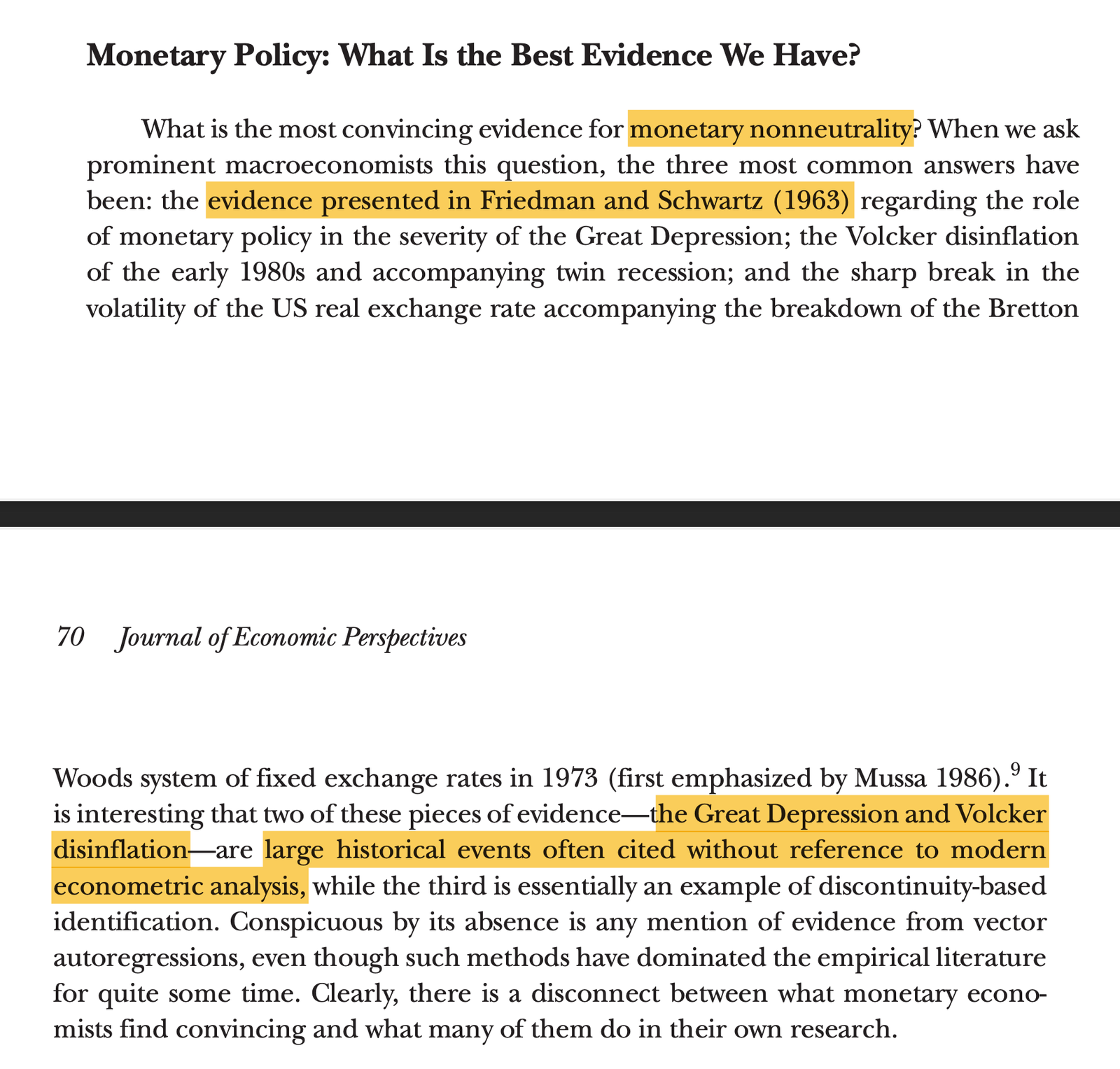
So, what’s the evidence ?
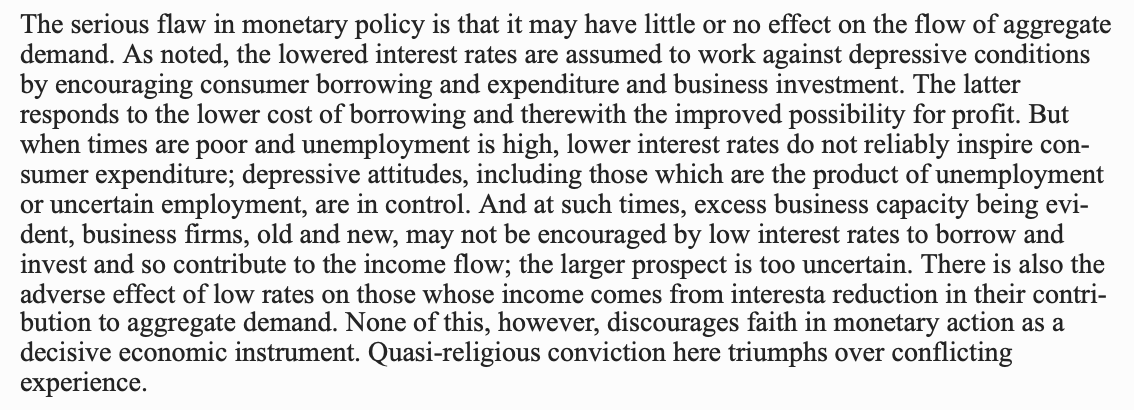
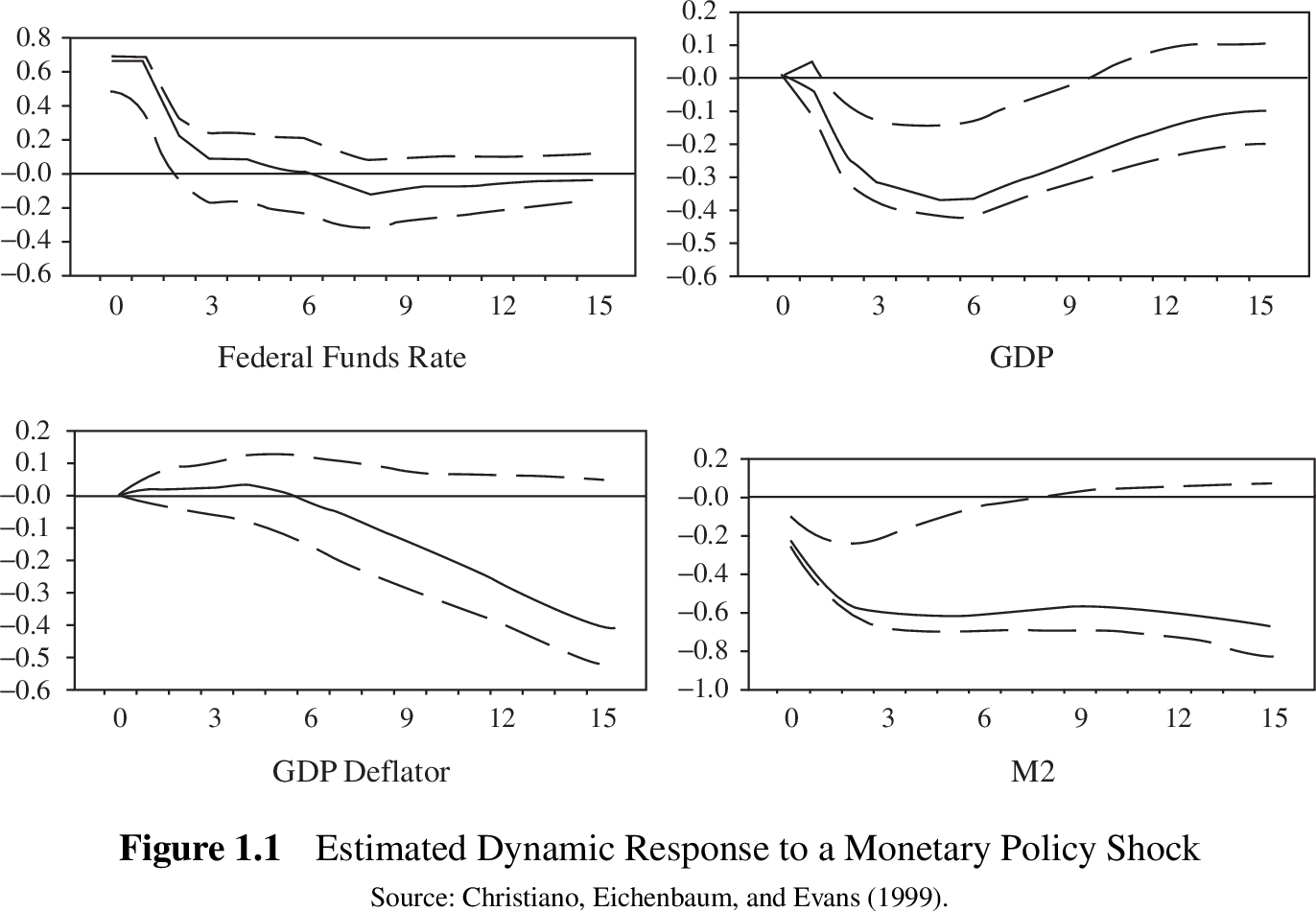
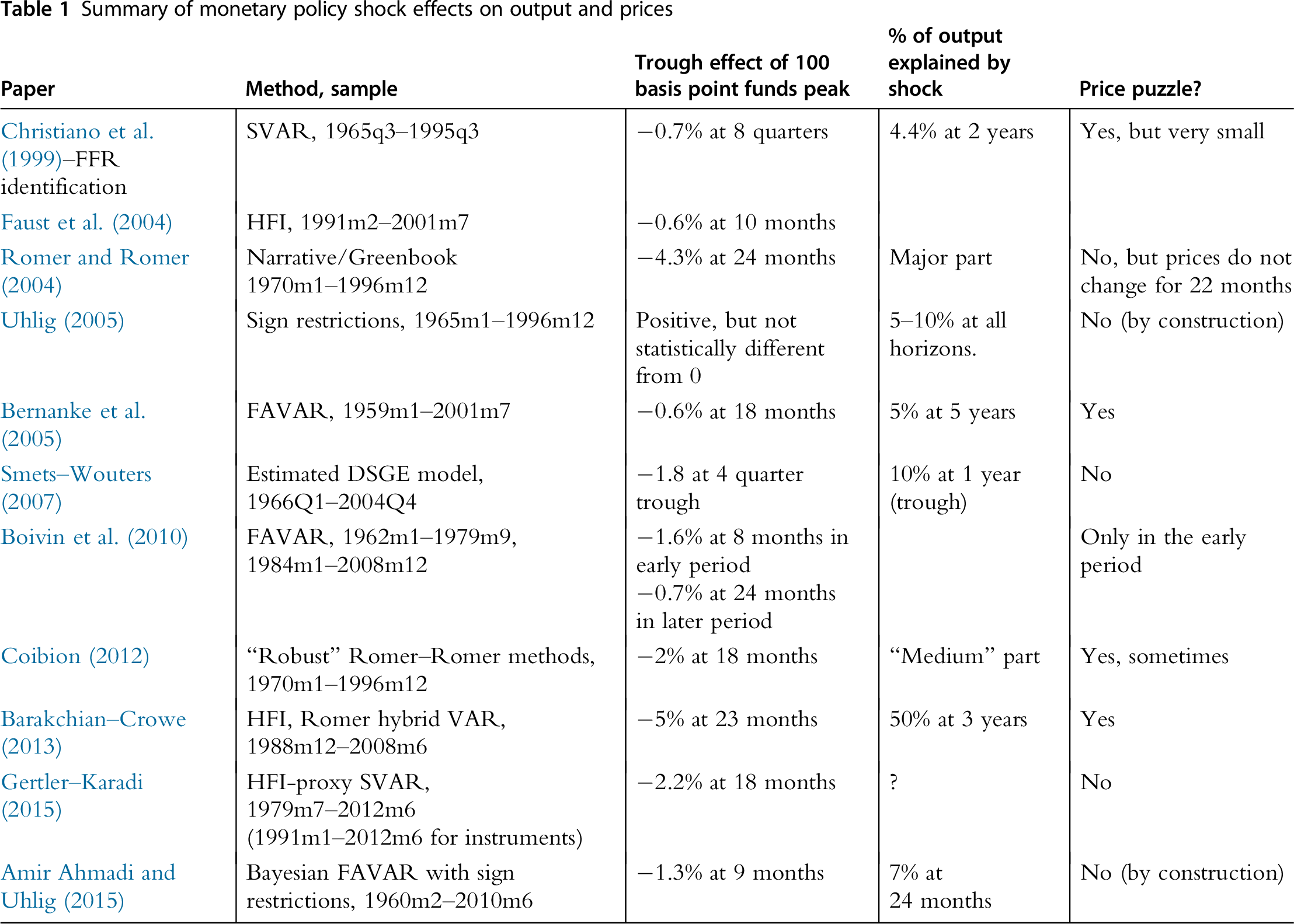
This argument is often made: monetary policy has real effects, hence prices must be sticky.
I think that this argument is incorrect. Here is another model with flexible prices, where monetary policy could have real effects:
Monetary policy redistributes disposable income between borrowers and lenders, especially through the mortgage market.
There is a paradox of thrift: more consumption, less saving leads to more investment:
Closed economy: increase in saving.
Open economy: increase in saving, and trade deficit, imbalance \(S-I\). (this is because there is a leakage of aggregate demand, so investment is also made elsewhere to increase capacity)


In my opinion, wages are indexed where inflation is regularly high. (cost of living adjustments)
Sometimes automatic (legal) indexations.
Outside of that there’s very little evidence for wage price spirals…
In fact wages have been falling during this episode, just as you’d have predicted if you forget about the Phillips curve.


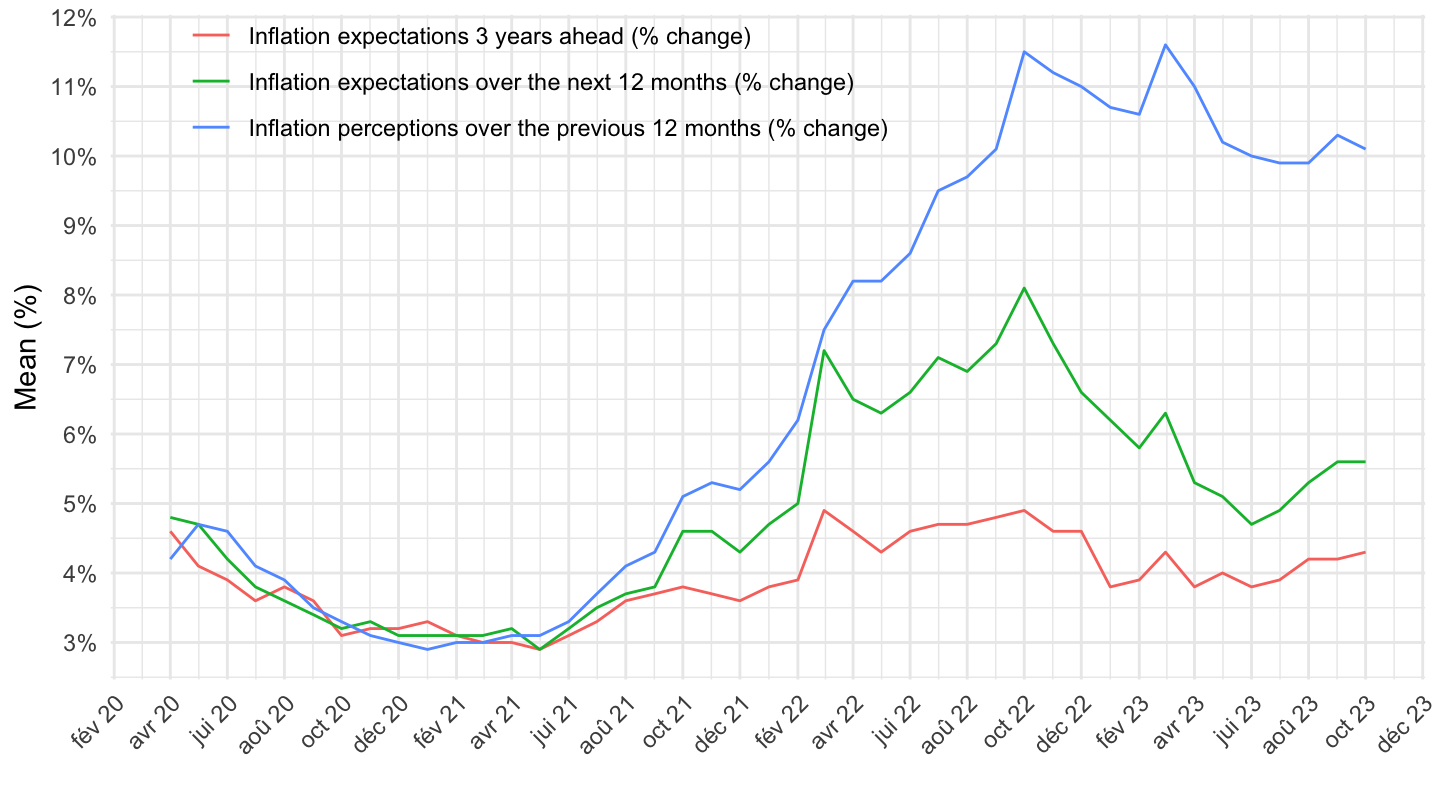
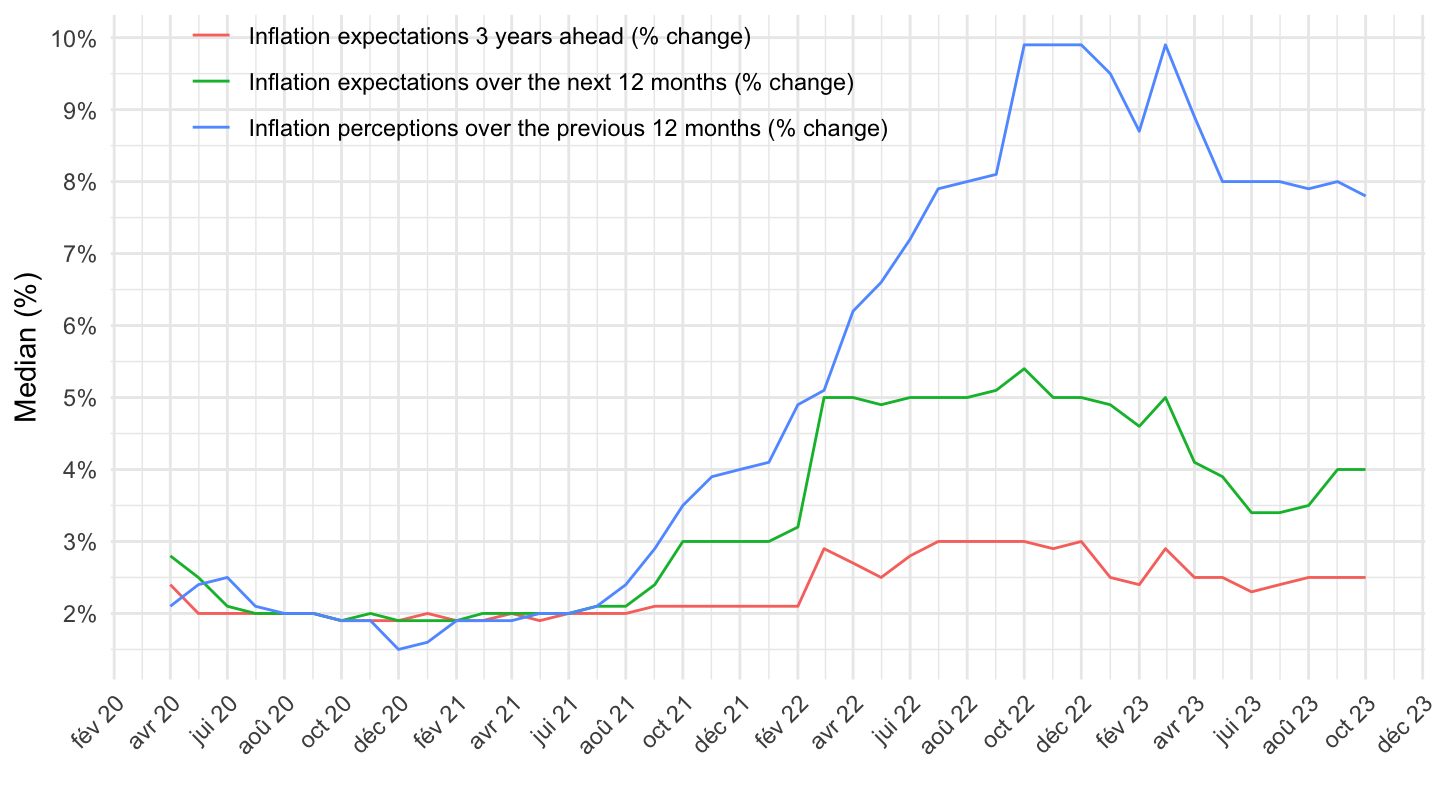
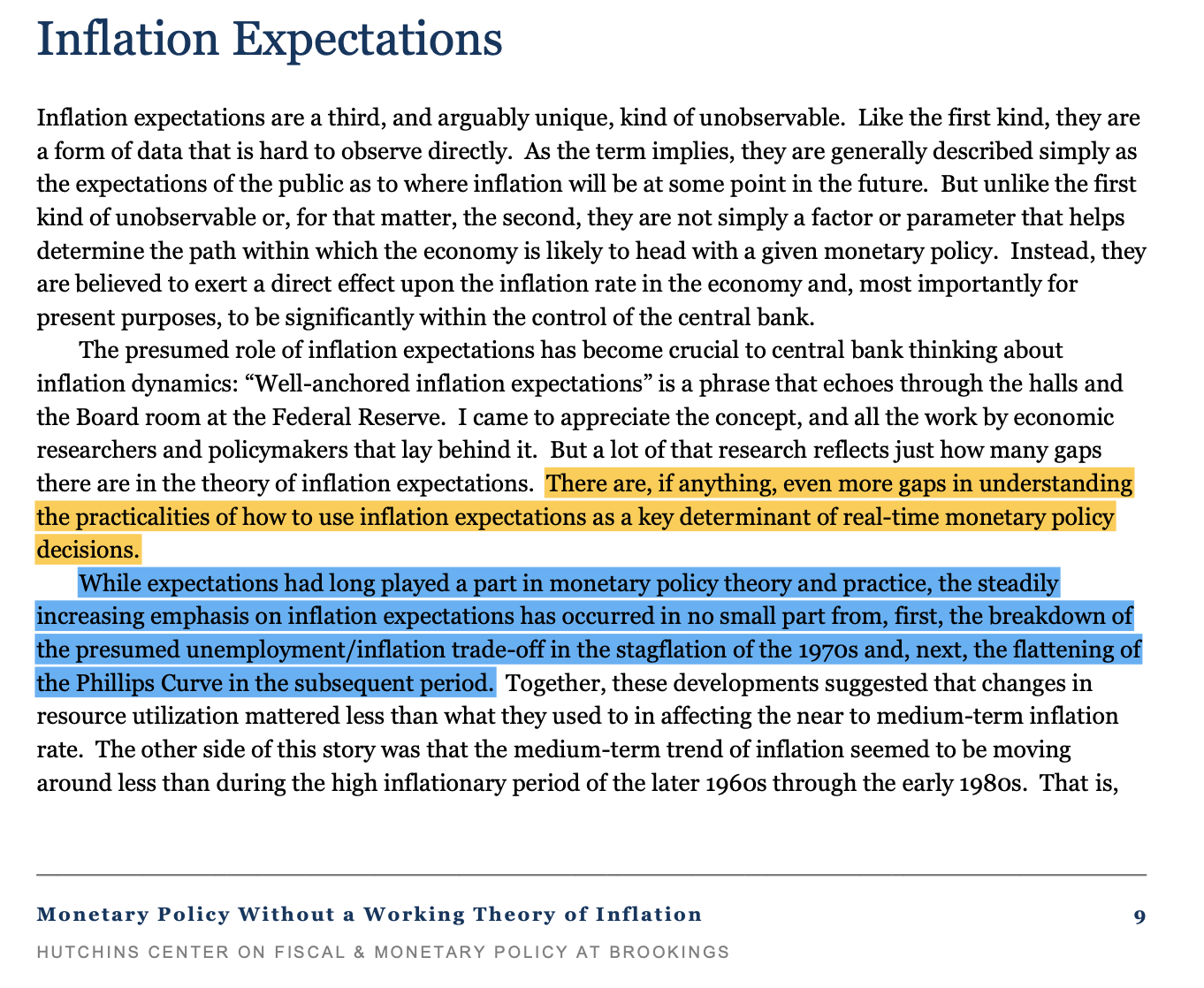
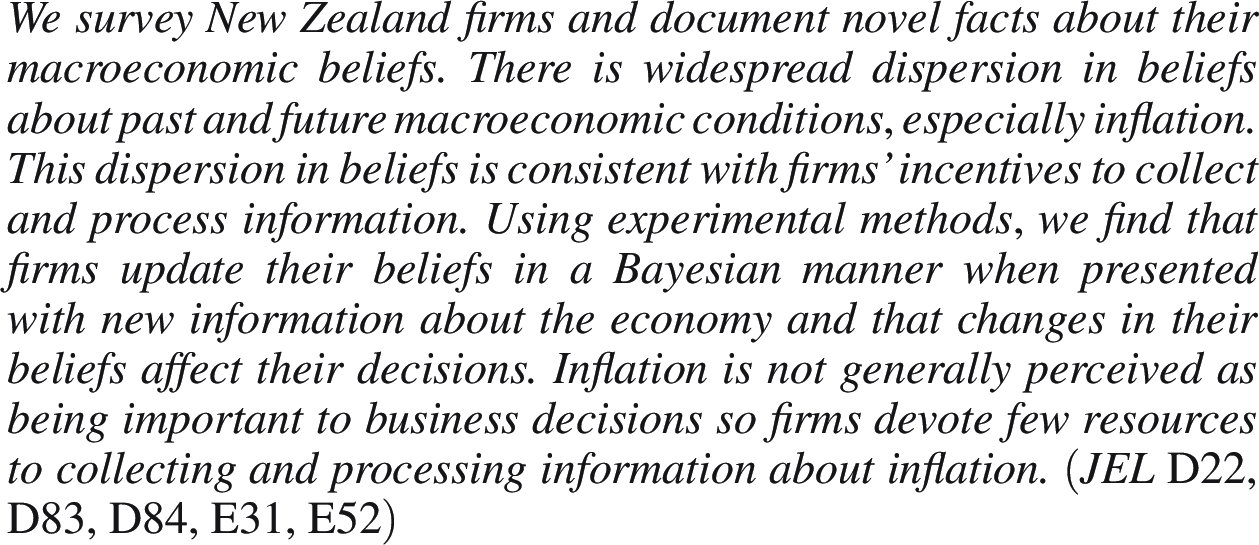
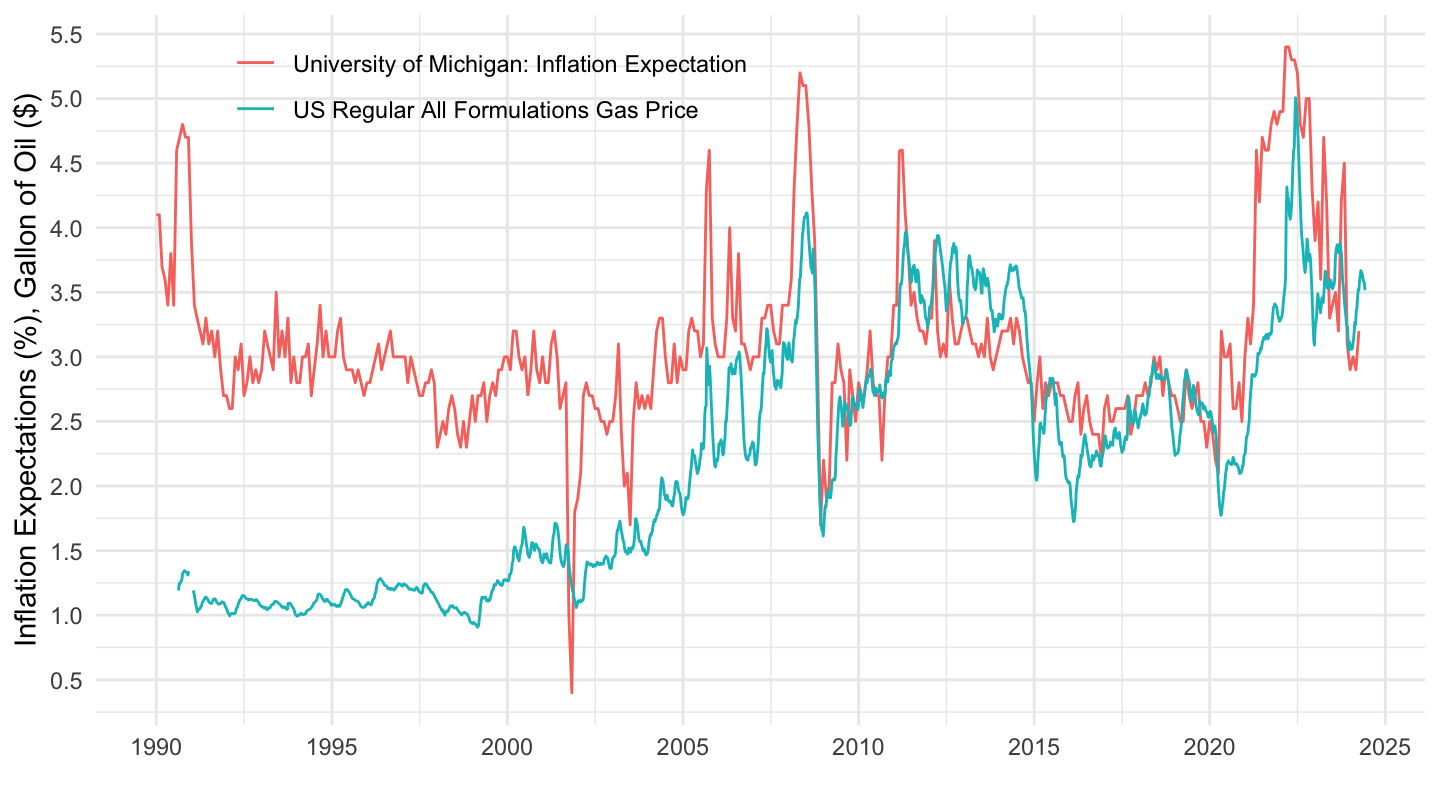
Inflation expectations are way too important in the discussion.
Same for price/wage spiral.
No evidence that monetary policy effects have to do with sticky prices…
Isn’t monetary policy some form of fiscal policy ? Should it then be left to independant central banks ?
Monetary policy has huge effects on financial markets. No wonder you have Fed/ECB “watchers” who are trying to understand how central bankers think.
Monetary policy works through nominal rates not just real rates.
Effects push in both directions: as MMT rightly points out, raising rates means more revenue for bondholders. Then depends on how fiscal rules work.
Substantial effect on the housing markets: know the macro-prudential policies, adjustable vs. fixed rates. Does not appear to be the result of an optimal contracting problem, so trying to model this should be probably abandoned.
Same probably works for firms.